Theopolis Logo

Biblical Studies

1136 articles

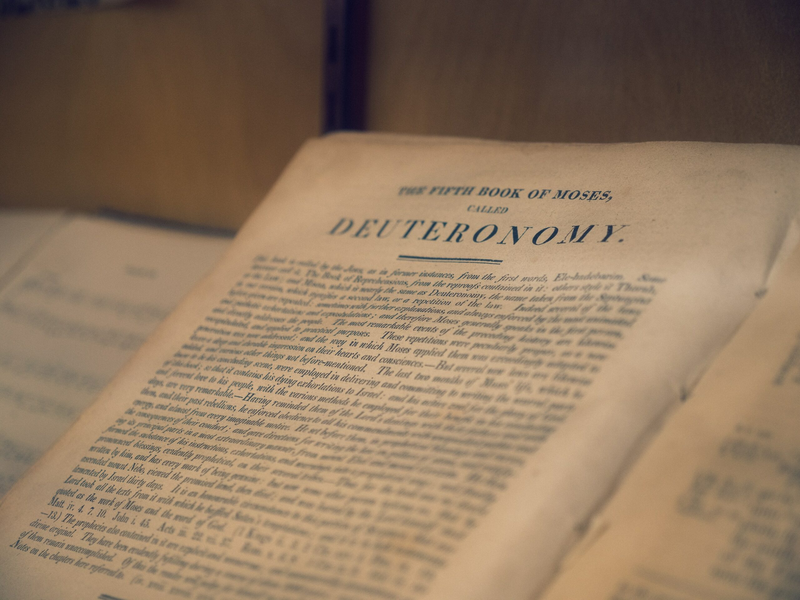
chris-bair-ndczc5739ck-unsplash
Deuteronomy

Holy Things for Holy People

The allusion to the Exodus story is contained in the first words of Deuteronomy 14:1 — “ye are the sons of Yahweh your God” — as well as in 14:2 in the use of the technical term translated “treasured possession,” “His own possession,” “peculiar people,” “precious people,” and so forth.…

by Ralph Allan SmithAugust 5, 2013
adam-and-eve-in-the-garden-of-eden-wenzel-peter
Deuteronomy

Forbidden Foods

I have argued that Deuteronomy 14:1-21 is an independent literary unit that applies the Third Word to the lives of Israelites from the time of Moses and Joshua. In this short pericope, Moses suggests broad and deep meaning by means of literary allusion to the stories of the creation and…

by Ralph Allan SmithJuly 31, 2013
eric-ward-7kqe_8meex8-unsplash
Augustine

Sexual Idolatry

Augustine famously prayed, “Our hearts our restless until they rest in You.” True indeed. Being creatures, we inherently sense our ontological poverty—our innate condition of dependence—and are compelled to find a sense of security. And it is also true—as Augustine’s own narrative painfully illustrates—that one of the things we most…

by Gerald HiestandJuly 24, 2013
chris-bair-ndczc5739ck-unsplash
Deuteronomy

Allusive Torah

In the first part of this essay, I argued that the story of the covenant is what unifies and grounds the laws in the book of Deuteronomy. In the third section of this essay, as part of my argument that Deuteronomy 14:1-21 forms a distinct pericope, I claimed that these…

by Ralph Allan SmithJuly 22, 2013
guido-jansen-nz-zat4qiuu-unsplash
Isaiah

Combustible God

Fire seems to be a motif in Isaiah 6. The chapter opens “in the year that king Uzziah died,” and we know that Uzziah died a leper because he tried to burn incense in the temple against the law of God. And in this context, in the year king Uzziah…

by Daniel StanleyJuly 10, 2013
sixteen-miles-out-d40gdcd_-he-unsplash
Biblical Studies

Rehabilitating the Quadriga

According to the medieval theory of the "Quadriga" or the "fourfold sense" of Scripture, each passage of Scripture has four dimensions of meaning. Protestants generally cast a suspicious eye on this "method" of reading. That's a mistake. It's a handy guide to the questions we should always ask as we…

by Peter LeithartJuly 8, 2013
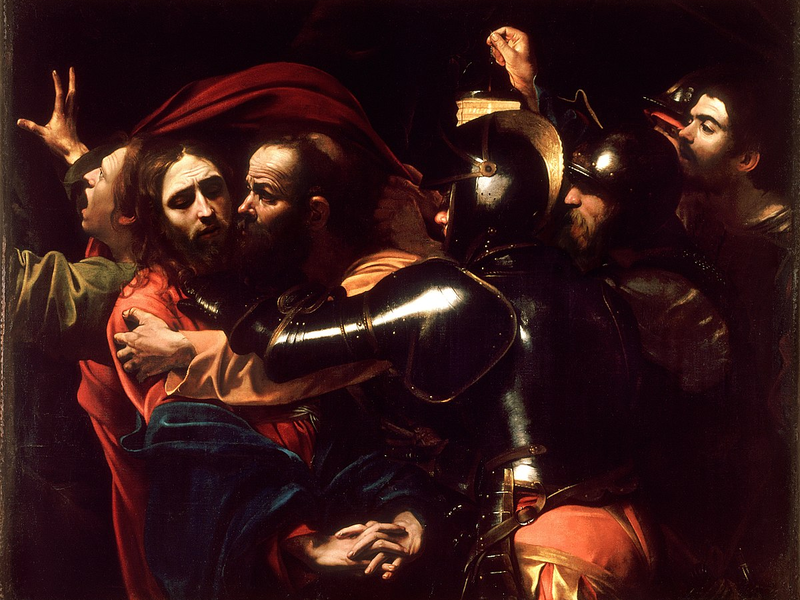
1200px-the_taking_of_christ-caravaggio_c-1602
John

Jesus, David, Adam: A Reading of John 18:1-11

John 18:1-11 appears on the surface to be a straightforward, if somewhat unusual, narrative of Jesus’ arrest by officers of the chief priests and Pharisees accompanied by an apparently large group of Roman soldiers, all of them led by the betrayer, Judas. But there is much more here than what…

by Ralph Allan SmithJuly 3, 2013
screenshot-2023-09-20-at-11-21-06-am
Hermeneutics

Raven of the Gospel

There’s a common theme that arises in the study of theologians James B. Jordan and Peter Leithart. It is this: Context matters. Details matter. This is God’s Word. The details are not arbitrary “filler” hiding the kernel of truth in the husk of the text. The husk and the kernel…

by Troy GreeneJune 26, 2013
screen-shot-2022-08-04-at-9-36-57-am
Matthew

Paul Doesn't Care About Universal Individual Sinfulness or General Revelation

One reason readers assume Paul is trying to prove that all human beings are sinful is that they understand him to be arguing that no one can keep the law. That means, they think, his opponents must believe that human nature is potentially sinless. Taking Paul’s statement that, if you…

by Mark HorneJune 17, 2013

Showing page 47 of 95

In Medias Res

Your weekly digest for all things Theopolis.

Donate

Theopolis is nearly 100% donor-supported. Consider joining us on our mission.