Theopolis Logo

Writing

Explore our collection of theological essays, biblical studies, and reflections on faith and culture.

See all
or
Abortion

Political Hermeneutics: The Argument From Silence, Part 2

Click HERE for part 1. III This leads to a further question. I have argued that silence cannot by itself establish a Scriptural principle, but does Scripture’s silence carry any weight in itself? Does the fact that something is unbiblical in a weak sense tell us anything at all? In…

by Peter LeithartMarch 13, 1990

hebrew-manuscript-6
Biblical Chronology

Groping Through the Gaps

Although nowadays gap theories are associated with dispensationalism, it was not always so. In the nineteenth century, scholars from a variety of backgrounds (Anglican, Reformed, and proto-fundamentalist) seem to have become fascinated by gaps. If you are not familiar with what I am talking about, this newsletter will acquaint you…

by James B. JordanFebruary 26, 1990
or
Abortion

Political Hermeneutics: The Argument from Silence, Part 1

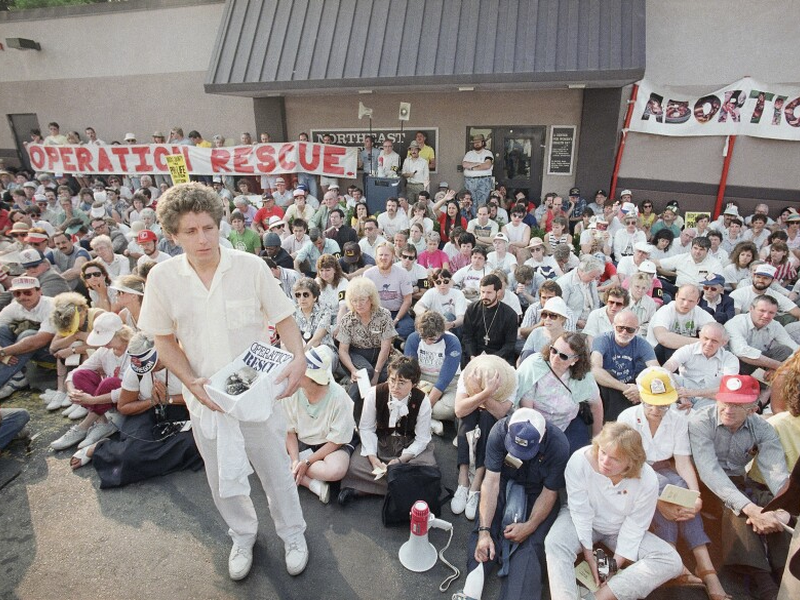
If the debate over Operation Rescue has proven anything, it has proven that there is absolutely no consensus among evangelicals in general, or among "reconstructionists" in particular, about how to use the Bible to judge political actions and movements. Each side of the debate claims biblical authority for its position,…

by Peter LeithartFebruary 13, 1990
49980-nicolas_poussin_-_the_judgment_of_solomon_-_wga18330-800w-tn
Biblical Studies

Advice From a Sojourner, Part 4

Two things I asked of Thee, Do not refuse me before I die: Keep deception and words of falsehood far from me, Give me neither poverty nor riches, Feed me with the food that it my portion, Lest I be full and deny Thee, And say, "Who is the LORD?"…

by James B. JordanFebruary 2, 1990
image-2
Biblical Horizons

Foucault’s Pendulum

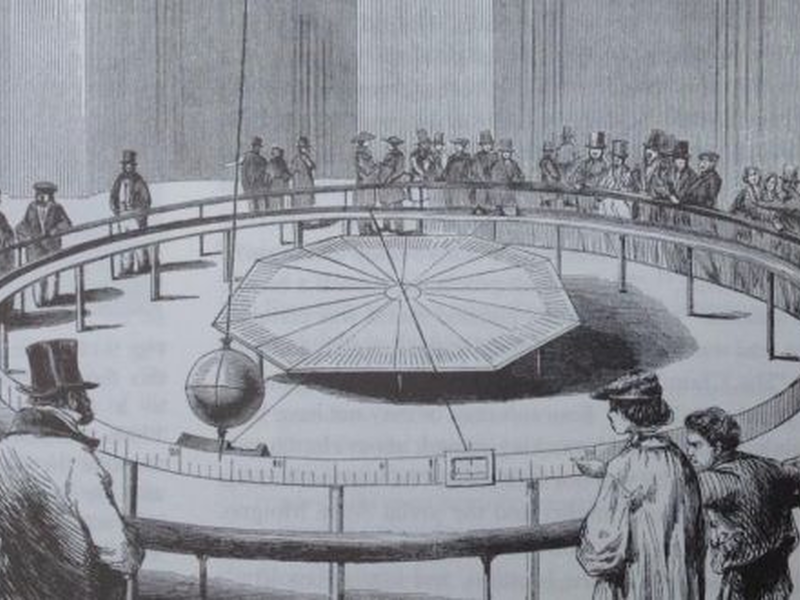
Umberto Eco’s "The Name of the Rose" was certainly one of the best literary works of the past decade, though the film version hardly measured up to it. Now Eco has given us a new novel, "Foucault’s Pendulum." Like Rose, Foucault’s Pendulum reflects on the limitations of human knowledge, and…

by James B. JordanJanuary 26, 1990
tanner-mardis-xuxghzhibn4-unsplash-1-2
Biblical Studies

What Is “Interpretive Maximalism”?

From time to time people ask me about "interpretive maximalism." They want to know what it is, and sometimes want to know if it represents some departure from the Reformed grammatico-historical, Biblico-theological approach to the Bible. I have something of a problem with these questions, because "interpretive maximalism" is not…

by James B. JordanJanuary 26, 1990

Showing page 305 of 309

See all

Showing page 15 of 43

See all
History

Eschatological self

Jerrold Seigel suggests that Locke’s self has “three different aspects”: We are selves to others “by virtue of what they know about our mental and moral life”; we are “selves to ourselves, but incompletely so, through the imperfect consciousness we have of our lives and deeds in the here and…

August 15, 2006
Science

Interior Senses

Murphy goes into admiring detail describing Thomas’s theory of interior senses in higher animals. Apart from its purely historical interest and the anticipations of later scientific theories, Thomas’s discussion has philosophical and theological interest in its own right. He claims, for instance, that there are a number of interior senses…

August 14, 2006
Science

Dueling Theodicies

Robert Young claims that the controversy over Darwinism in the 19th century was not so much a religion-v.-science controversy as a duel between competing theodicies. At one level, he argues, “the protagonists in the debate were in fundamental agreement. They were fighting over the best ways of rationalizing the same…

August 14, 2006
Philosophy

Mind-Body and Energy

Murphy offers an amusing discussion of the question, Assuming a Cartesian dualism of mind and body, how can the mind cause a physical object like the body to move? If one assumes that physicists are correct that physical energy can be transferred to a physical system, it has to arise…

August 14, 2006
Theology

Effects of dualism

Murphy makes this interesting comment, which she admits is an oversimplification: “the adoption of a dualist anthropology in the early centuries of the church was largely responsible for changing Christians’ conception of what Christianity is basically all about. I am suggesting that original Christianity is better understood in socio-political terms…

August 14, 2006
Theology

Physicalism and the Bible

In her Bodies and Souls, or Spirited Bodies? (Cambridge, 2006), Nancey Murphy argues for a non-reductionist version of physicalism on the question of the “body-soul” problem: “This is the view that humans are composed of only one ‘part,’ a physical body.” She spends a bit over six pages near the…

August 14, 2006

Showing page 1810 of 2212

Browse by Category

In Medias Res

Your weekly digest for all things Theopolis.

Donate

Theopolis is nearly 100% donor-supported. Consider joining us on our mission.