Theopolis Logo

Writing

Explore our collection of theological essays, biblical studies, and reflections on faith and culture.

See all
screen-shot-2022-08-04-at-9-36-57-am
John

How Jesus Saved the World, Part 1

We are too used to reading the Gospels’ stories of Jesus’ arrest, trial, condemnation, and death from a devotional perspective and so we miss a lot of what’s going on. We actually have a difficult time trying to figure out the meaning of the details of the story. Of course,…

by Jeff MeyersFebruary 21, 2013
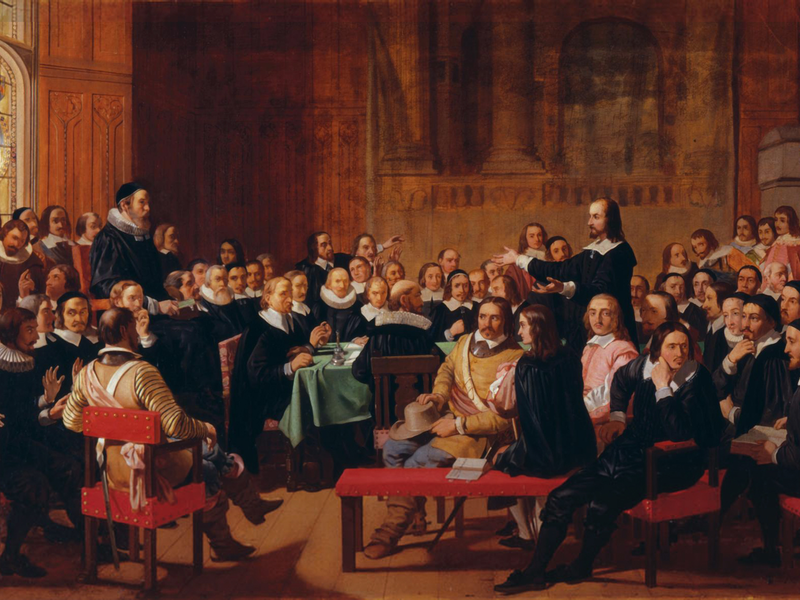
assertion_of_liberty_of_conscience_by_the_independents_of_the_westminster_assembly_of_divines_1644
Protestantism

The Forgotten Reformation?

This is the first in a series of essays on "Continuing the Reformation." Many different churches descend from the original Protestant Reformation, and those that are the most conservative are often insistent that they are largely if not completely true to the Reformation, or to the branch from which they…

by James B. JordanFebruary 19, 2013
markus-winkler-aid-xyrtlec-unsplash
Theopolis News

Reading the Bible

Trinity House fellow James B. Jordan will be teaching a one-day seminar on "How to Read the Bible for the First Time . . . Again" next Friday, February 22, in North London. The event is sponsored by Emmanuel Evangelical Church, Southgate, costs 20 pounds (10 for theology students) and…

by Peter LeithartFebruary 16, 2013
chris-leboutillier-be8mnfxzbgo-unsplash
Church Calendar

A Primer on Ash Wednesday

Audio Reading of this Post https://theopolis-blogcast.simplecast.com/episodes/a-primer-on-ash-wednesday What is Ash Wednesday? Ash Wednesday is the first day of Lent, a season focused on the sufferings and cross of Jesus. But Jesus’ death on the cross cannot be separated from the cross we are called to bear in union with him, so…

by Rich LuskFebruary 13, 2013
aaron-burden-qjdzyt_k8xg-unsplash
Theopolis News

Welcome

Welcome to the Trinity House web site. It’s unfinished, as you’ll soon discover, but it’s more finished than it was, and for that we are very grateful. Thanks to David Dalbey for the design, and to my son Sheffield for the execution. Trinity House exists to advance the reformation of…

by Peter LeithartFebruary 13, 2013
screen-shot-2022-05-12-at-12-07-23-pm
Biblical Horizons

More on the “Regeneration” Business

In our I hope brief blog-versation, Doug Wilson has posted a couple more things to think about. In one he asks who our father/Father is. We either have God or the devil as our father. Well, yes and no. I’m with Doug in what he’s getting at, I think, but…

by James B. JordanJune 23, 2012

Showing page 199 of 309

See all
See all
Literature

Seneca’s failure

Wallace again on Timon of Athens . Wallace argues that Shakespeare has written a play to explore Seneca’s society of benefits and gratitude, and shows that the classical model of social order is impossible: “the cast would appear to have been designed to test the Senecan hypothesis about the nature…

November 1, 2007
Philosophy

Elizabethan Seneca

Wallace again on Seneca in Shakespeare: “The first separat e publication of De Benficiis in an English translation was Nicholas Haward’s The Line of Liberalitie in 1569, which included only the first three books, but William Baldwin’s popular Treatise of Morall Philosophie had appeared in 1547 and contained one chapter…

November 1, 2007
Literature

Senecan Shakespeare

In a 1986 article in Modern Philology , John Wallace argues that Timon of Athens is “Shakespeare’s Senecan Study,” reflecting on the issues raised by Seneca’s de Beneficiis : “Shakespeare must have been thinking of Seneca, but a safer argument could have been constructed on the premise that Shakespeare was…

November 1, 2007
Literature

Roman trilogy

Paul Cantor describes three of Shakespeare’s Roman plays as a trilogy, moving from the Republic ( Coriolanus ) to the early empire ( Julius Caesar ) to the decadence of Octavian ( Antony and Cleopatra ). Together they form “a kind of historical trilogy, dramatizing the rise and fall of…

November 1, 2007

Fat, Body Parts, Liver Lobes

In her Leviticus as Literature , the late Mary Douglas offers some interesting possibilities for interpreting the prohibition of eating fat and for the arrangement of animal portions on the altar. Her interpretation is guided by her recognition of analogies between Sinai, the tabernacle, and the body, both of the…

November 1, 2007

Showing page 1612 of 2212

Browse by Category

In Medias Res

Your weekly digest for all things Theopolis.

Donate

Theopolis is nearly 100% donor-supported. Consider joining us on our mission.