Theopolis Logo

Writing

Explore our collection of theological essays, biblical studies, and reflections on faith and culture.

See all
aaron-burden-1ebsmyrau-s-unsplash
Biblical Horizons

An Older Essay on the Gospel Order

I thought it might be good to put this up here, since it is 14 years old, and itself reflects earlier discussion. From this you can see that we at BH have been considering this notion for quite some time. Clearly, the last word has not been said. — James…

by James B. JordanFebruary 14, 2008

aaron-burden-qjdzyt_k8xg-unsplash
Biblical Horizons

Chiasms in James

Hopefully, my commentary on James will be out later this year. But here are a few chiasms for your consideration. I think the James 5 chiasm orginally came from Doug Jordan. The entire book of James is focused on how the pastors and leaders (“brothers”) of the church use their…

by Jeff MeyersFebruary 14, 2008
screenshot-2023-08-30-at-11-50-23-am
Job

Parables | (Part 2)

In my first post I noted that the parables of Jesus were not simply illustrative stories. They are really nothing like the kind of simple, homely illustrations that preachers often use to explain difficult concepts to their congregations. Just to be clear: there’s nothing wrong with illustrating one’s sermonic statements.…

by Jeff MeyersFebruary 14, 2008
skyler-gerald-akljfvj5ym4-unsplash
Ephesians

The Praise Precedes the Indicative

Ephesians is often treated as a pure type example of the Pauline method that “the indicative preceds the imperative.” But what Paul does first is pray . Simply reading verse 3 and following involves readers in a prayer of thanksgiving to God–and much more so for those listening to the…

by Mark HorneFebruary 14, 2008
aaron-burden-qjdzyt_k8xg-unsplash
Luke

"I Came Not to Call the Righteous, but Sinners"

Yesterday, I took part with my oldest son in a church-sponsored city outreach project (not because I’m especially prone to such behavior but because my son has a Boy Scout requirement that this would help him meet). Before we were sent out on our various jobs, the leader gave a…

by Mark HorneFebruary 11, 2008
aaron-burden-1ebsmyrau-s-unsplash
Biblical Studies

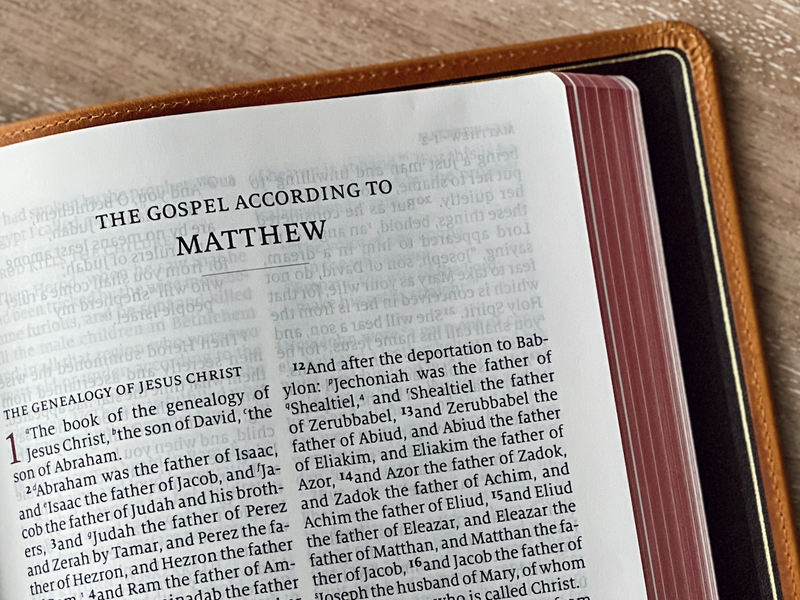
The Sequence of the Four Gospels

There is a scene in Prince Caspian , the second in C. S. Lewis’s Chronicles of Narnia that helps explain why it is we have four Gospels, that is four accounts of the Good News of Jesus Christ—Matthew, Mark, Luke, and John. It is the account of Lucy’s longed-for experience…

by Jeff MeyersFebruary 9, 2008

Showing page 215 of 309

See all
See all

Soldiers, Martyrs, Choristers

The numbering of the sealed in Revelation 7 alludes to the census events of the book of Numbers. There, Moses initially numbers men twenty years and older, mustering them as the troops that will conquer the land. (The second census, in Numbers 26, includes women and has a different focus.)…

November 26, 2014
Trinity

Are the Divine Persons Persons?

The “personalist” understanding of the Trinity, articulated most influentially in the work of John Zizioulas, has fallen on hard times. Recent scholars have attacked Zizioulas’s idea that Cappadocian Trinitarianism represented an ontological revolution, hammering again and again the distinction between divine and human personhood. Michel Barnes’s conclusion is the most…

November 26, 2014
Theology

Protestant Eyes

Protestant soteriology claims to deal with perennial patterns of behavior and belief: Striving for approval from God by our performance, self-righteousness, works-righteousness, pride in our achievements, etc. Let’s grant that these are perennial patterns of behavior, though they will likely take various forms in different cultural settings. That’s not just…

November 25, 2014

Paul and the Petty Tyrants

Theodore Jennings ( Transforming Atonement , 158) observes that “what is visible on the grand scale of imperial political history also lodges itself in the dynamics of quite small-scale communities, including those that may seem to be, and may think of themselves as, and may even in important respects actually…

November 25, 2014

The Grounds of Justification

Markus Barth ( Acquittal by Resurrection ) sharply raises the question of the justice of God’s verdict of justification. How can God pronounce the guilty innocent, the ungodly righteous? Barth raises the stakes by insisting that the justice should be evident to all: “If after the proclamation of a verdict,…

November 25, 2014

The Liturgical Formation of Culture

Over at the Theopolis Institute site , I offer some reflections on the liturgical formation of culture through a consideration of the biblical anatomy of human action.

November 25, 2014

Showing page 494 of 2212

Browse by Category

In Medias Res

Your weekly digest for all things Theopolis.

Donate

Theopolis is nearly 100% donor-supported. Consider joining us on our mission.