Theopolis Logo

Writing

Explore our collection of theological essays, biblical studies, and reflections on faith and culture.

See all
img_0166-2
How to Worship

How Liturgy Simplifies Worship for the Cognitively Impaired

Suffer little children, and forbid them not, to come unto Me. In 2005, God blessed our family with our third child, our second daughter, whom we named Bethany. As soon as Bethany was born, we knew there was something different about her. Unlike her two older siblings, who were born…

by Gregory LaughlinMay 4, 2017
screen-shot-2017-05-01-at-1-09-10-pm
Creeds

How Pastors Can Incorporate the Creeds in their Churches

Christian, what is it that we believe? While Creeds like the Nicene and Apostle’s have been fundamental pieces of Christian liturgy and life, the American Church is highly unattached to these classic statements. From this creedal phobia has arisen the popular “No Creed, but Christ” slogan. Such slogan, of course,…

by Uri BritoMay 2, 2017
wars-of-religion
Books

Myth of Religious Violence

Revisiting William Cavanaugh’s devastating 2009 The Myth of Religious Violence . The myth of Cavanaugh’s title is a well-known one. According to the myth, religion is a distinct sphere of human life and practice from the rest of human social life, a universal impulse in human beings, and is dogmatic,…

by Peter LeithartApril 27, 2017
resurrection
Church Calendar

A Glad New Day

19 Then the same day at evening, being the first day of the week, when the doors were shut where the disciples were assembled for fear of the Jews, came Jesus and stood in the midst, and saith unto them, Peace be unto you. 20 And when he had so…

by Arthur KayApril 25, 2017
doubting-thomas
John

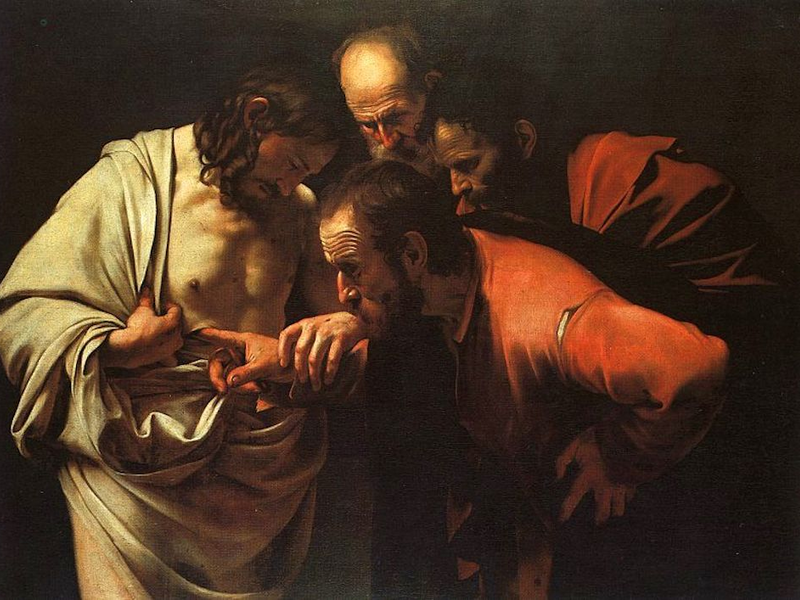
Thomas and Us

An octave is a repetition, a repetition with a difference. It’s not the first note played again , but the first note played at a higher pitch. Octaves have always marked new beginnings. Hebrew boys were circumcised on the eighth day. Firstborn sheep were dedicated to Yahweh on the eighth…

by Peter LeithartApril 21, 2017
sky-from-bridge
Church Calendar

Resurrection: The Best and Worst News

We say Jesus’ resurrection is good news. It wasn’t good news for the disciples on the first Easter. More like perplexing, bewildering news. For others, it wasn’t perplexing, and it certainly wasn’t good. It was plain old bad news. Early in Luke’s gospel, Herod is terrified that Jesus might be…

by Peter LeithartApril 20, 2017

Showing page 113 of 309

See all

Showing page 32 of 43

See all

Necessity of Incarnation

Would the Son have been incarnate if Adam had not sinned? 1 Corinthians 15:44-45 provides a prooftext for an affirmative answer. Verse 44 says that the “spiritual body” is implied by the existence of the “natural body.” Human beings were created in a natural state, but they were destined from…

August 12, 2006
Philosophy

Decentered Self of Modernity

Bishop Joseph Butler of Durham worried about the consequences of Locke’s empiricism: “That personality is not a permanent, but a transcient thing: that it lives and dies, begins and ends continually: that no one can any more remain one and the same person two moments together, than two successive moments…

August 12, 2006
History

Embedded mind

Modernity ignores the social, linguistic, and political context of thought, and the way interest shapes the mind; postmodernity foregrounds all this. Perhaps, but . . . . Descartes said that his travels demonstrates that “all those who hold notions strongly contrary to our own are not for that reason barbarians…

August 12, 2006
History

Self and World

For premoderns - ancients and medievals - there was a homology between the self and the world. Man was seen as microcosm, and, as Seigel puts it, they believed that “the world, like the self, is structured so as to fulfill intelligible moral ends.” The initial shift in early modernity,…

August 12, 2006
Philosophy

Birth of the Modern Self?

Seigel views with “considerable skepticism” the notion that Descartes constructed “a general theory of the human self and subject on the basis of the cogito .” In his treatise on the Passions of the Soul , Descartes claimed that the soul was linked with the body, which acts on the…

August 12, 2006
History

Purity

According to Seigel, “Descartes’s view of reason as most pure and solid when it was free of corruption by the world’s confusions implied nothing less than the attempt to break free of all social and cultural experience.” Not for the first time, I wish there were an anthropological history of…

August 12, 2006

Showing page 1812 of 2212

Browse by Category

In Medias Res

Your weekly digest for all things Theopolis.

Donate

Theopolis is nearly 100% donor-supported. Consider joining us on our mission.