Theopolis Logo

Writing

Explore our collection of theological essays, biblical studies, and reflections on faith and culture.

See all
or
Abortion

Political Hermeneutics: The Argument From Silence, Part 2

Click HERE for part 1. III This leads to a further question. I have argued that silence cannot by itself establish a Scriptural principle, but does Scripture’s silence carry any weight in itself? Does the fact that something is unbiblical in a weak sense tell us anything at all? In…

by Peter LeithartMarch 13, 1990

hebrew-manuscript-6
Biblical Chronology

Groping Through the Gaps

Although nowadays gap theories are associated with dispensationalism, it was not always so. In the nineteenth century, scholars from a variety of backgrounds (Anglican, Reformed, and proto-fundamentalist) seem to have become fascinated by gaps. If you are not familiar with what I am talking about, this newsletter will acquaint you…

by James B. JordanFebruary 26, 1990
or
Abortion

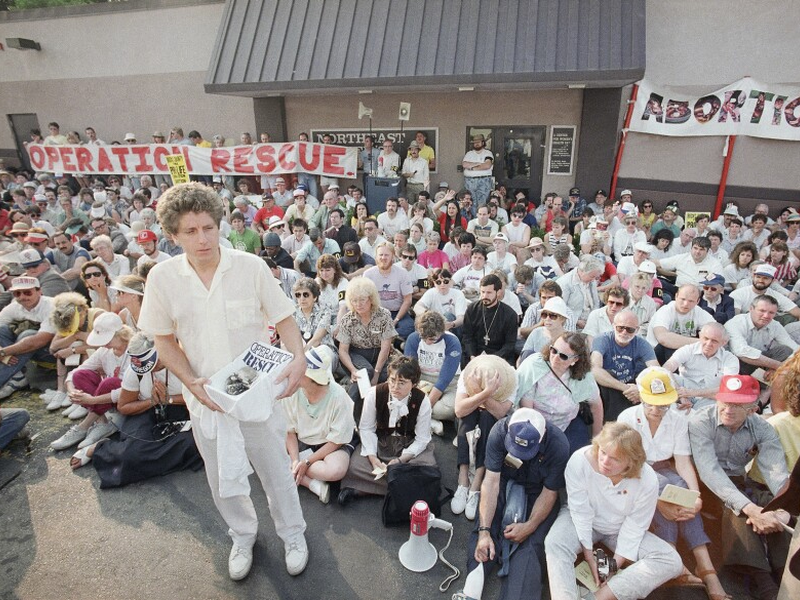
Political Hermeneutics: The Argument from Silence, Part 1

If the debate over Operation Rescue has proven anything, it has proven that there is absolutely no consensus among evangelicals in general, or among "reconstructionists" in particular, about how to use the Bible to judge political actions and movements. Each side of the debate claims biblical authority for its position,…

by Peter LeithartFebruary 13, 1990
49980-nicolas_poussin_-_the_judgment_of_solomon_-_wga18330-800w-tn
Biblical Studies

Advice From a Sojourner, Part 4

Two things I asked of Thee, Do not refuse me before I die: Keep deception and words of falsehood far from me, Give me neither poverty nor riches, Feed me with the food that it my portion, Lest I be full and deny Thee, And say, "Who is the LORD?"…

by James B. JordanFebruary 2, 1990
image-2
Biblical Horizons

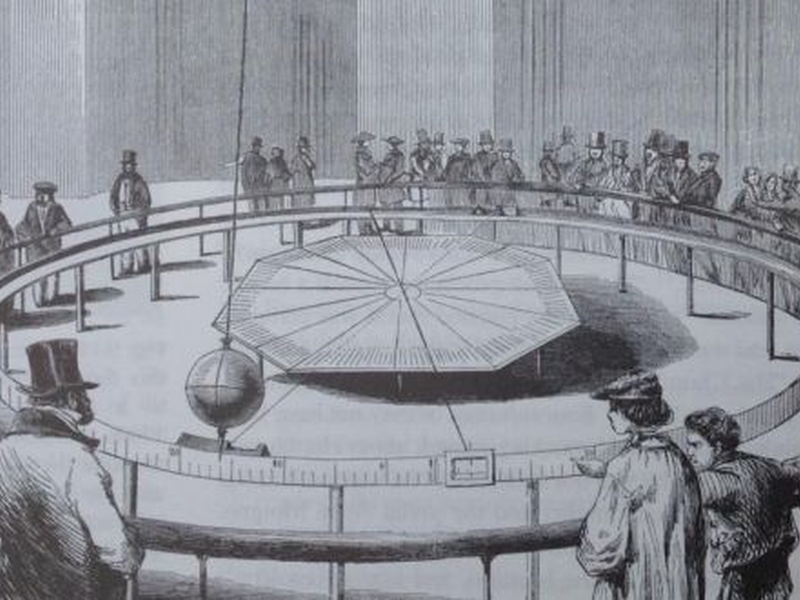
Foucault’s Pendulum

Umberto Eco’s "The Name of the Rose" was certainly one of the best literary works of the past decade, though the film version hardly measured up to it. Now Eco has given us a new novel, "Foucault’s Pendulum." Like Rose, Foucault’s Pendulum reflects on the limitations of human knowledge, and…

by James B. JordanJanuary 26, 1990
tanner-mardis-xuxghzhibn4-unsplash-1-2
Biblical Studies

What Is “Interpretive Maximalism”?

From time to time people ask me about "interpretive maximalism." They want to know what it is, and sometimes want to know if it represents some departure from the Reformed grammatico-historical, Biblico-theological approach to the Bible. I have something of a problem with these questions, because "interpretive maximalism" is not…

by James B. JordanJanuary 26, 1990

Showing page 305 of 309

See all

Showing page 35 of 43

See all

On the History of Charisms

“T he time has come,” writes Luigino Bruni ( The Wound and the Blessing ), “to rewrite the economic and civil history of societies, taking seriously the civil and economic role of charisms.” It's impossible “to understand either the past or the present situation in European economics deeply (or well…

May 8, 2017

Inequality and Inequality

I n Adam Smith and the Character of Virtue , Ryan Patrick Hanley explains why Smith considered the “inequality of precommercial societies [to be] infinitely more pernicious than the inequality to be found in commercial society.” He does this by demonstrating “how the conditions that afford the powerful with maximal…

May 5, 2017

Blue Arrogance

A t the Daily Beast , Joel Kotkin exposes the “arrogance of Blue America,” expressed in talk of Blue State secession and contempt for Red State Trump country. According to Kotkin, “The blue bourgeoisie’s self-celebration rests on multiple misunderstandings of geography, demography, and economics. To be sure, the deep blue…

May 5, 2017

Theology of Gift

I ’ve quoted this before, often, but it's so good it merits re-quotation. From Luther's 1528 “Confession”: These are the three Persons and the one God, Who has given Himself to us wholly with all that He is and all that He has. The Father gives Himself to us, with…

May 5, 2017
Architecture

Architectural Asceticism

R eviewing Adrian Forty's Concrete and Culture in the TLS , James Hall summarizes the shifting fortunes of concrete as a building material: “Reinforced concrete's global heyday spanned roughly from the 1920s to the 60s, when exposed, cantilevered concrete was all the (modernist) rage. Then a pragmatic and/or postmodernist reaction…

May 5, 2017
Shakespeare

Authentic Shakespeare

D on-John Dugas's recent Shakespeare for Everyman offers a revisionist account of the rise of “authentic” stagings of Shakespeare in the twentieth century. The very meaning of “authentic” changed, as Sally Barnden explains in her TLS review of Dugas's book: “Authentic Shakespeare performance was no longer understood to be that…

May 5, 2017

Showing page 178 of 2212

Browse by Category

In Medias Res

Your weekly digest for all things Theopolis.

Donate

Theopolis is nearly 100% donor-supported. Consider joining us on our mission.