Theopolis Logo

Writing

Explore our collection of theological essays, biblical studies, and reflections on faith and culture.

See all
kelly-sikkema-aageorr0iqs-unsplash
Lent

Embrace Pessimism

Optimism is “an inclination to put the most favorable construction upon actions and events or to anticipate the best possible outcome.” 1 On the other hand, pessimism is “an inclination to emphasize adverse aspects, conditions, and possibilities or to expect the worst possible outcome.” We can see that optimism and…

by Bogumil JarmulakFebruary 21, 2024

michael-hamments-0vzptqdw2-i-unsplash-1
Biblical Theology

2 Trees of Eden & What They Mean: Knowledge of Good & Evil vs. Life

If we wish to understand the Tree of Life and the Tree of the Knowledge of Good and Evil, we must begin with seeing them as a part of the creational order. Trees, along with plants and seed-bearing things, come to life by the word of God as part of…

by Mark BriansFebruary 13, 2024
screenshot-2024-02-06-at-5-44-53-pm
Death

Training to Die

“I chant slips and irreversible disasters, wiltings, failures, scars, the little disappointments and the large, blue streaks down a world that wishes it was only suncolors.” Paul J. Pastor from Kintsugi Song I recently lost something very valuable. Something I’d had for years and used every day. But, it wasn’t…

by Mandi GerthFebruary 7, 2024
screenshot-2024-01-11-at-2-38-07-pm
Jonah

Jonah’s Backward Exodus

In his eponymous book, Jonah follows an exodus pattern. He travels through the waves and east of the city into the wilderness. On a first reading, it looks like another use of this common literary shape in the Old Testament: salvation through the waters of death and the wilderness of…

by Tim SuffieldJanuary 30, 2024
johann-siemens-epy0gbjzzzu-unsplash
Revelation

Where is the Tree of Knowledge in New Jerusalem?

“Everyone serves the good wine first, and when people have drunk freely, then the poor wine. But you have kept the good wine until now.” The unknowing master of ceremonies didn’t know how right he was. We see this play out in John’s apocalypse. The end is like the beginning,…

by David AppoldJanuary 23, 2024
sincerely-media-gf0ngcju5lw-unsplash
Luke

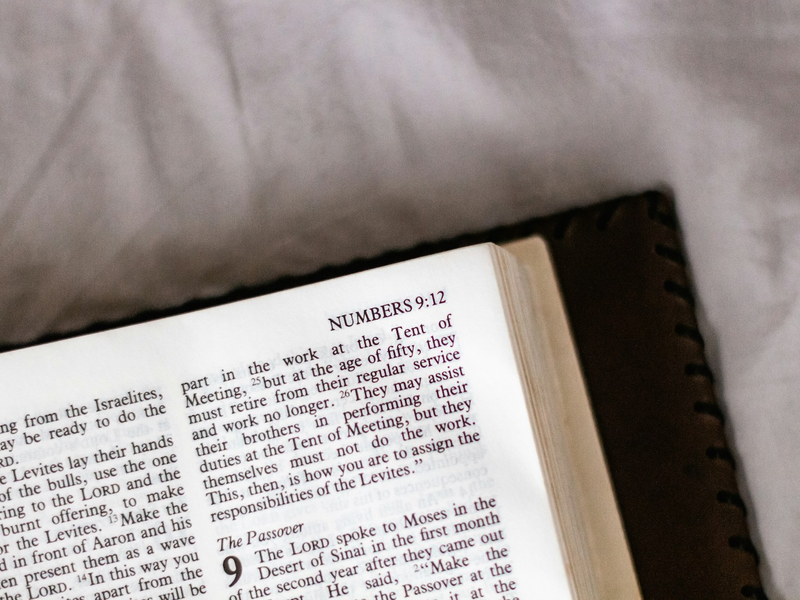
The Test of Adultery

Read in isolation, The Test of Adultery (Num 5:11-31) presents the reader with a seemingly bizarre ritual, conjuring up ideas bordering on the Salem Witch Trials. Beyond this, pressing questions linger—such as, “Why is the woman in particular singled out, while no test is provided for the husband of a…

by Ben LoveladyJanuary 17, 2024

Showing page 23 of 309

See all

Showing page 37 of 43

See all
Literature

Ibsen

Ibsen, Steiner argues, did not write tragedies. Ibsen wrote “dramatic rhetoric” calling society to reform. For real tragedy, there is no such “solution” to be found, there is no remedy, except destructive sacrifice and perhaps a deus ex machina. From this angle, tragedy is perhaps among the STOICHEIA that prepared…

January 7, 2004
Literature

More Quotations from Steiner

Some more quotations from Steiner’s Death of Tragedy : “We cannot understand the romantic movement if we do not perceive at the heart of it the impulse toward drama . . . . The romantic mode is neither an ordering nor a criticism of life; it is a dramatization. And…

January 7, 2004
Theology

NT Wright’s Rutherford House Lecture

Some thoughts on NT Wright’s Rutherford House Lecture, August 2003. I have little disagreement with much of the lecture, and it clarified a number of things for me. Wright’s views on justification, however, continue to puzzle me at a number of points. Here’s an attempt to clarify my (or NTW’s)…

January 7, 2004
Theology

NT Wright’s Rutherford House Lecture

Some thoughts on NT Wright’s Rutherford House Lecture, August 2003. I have little disagreement with much of the lecture, and it clarified a number of things for me. Wright’s views on justification, however, continue to puzzle me at a number of points. Here’s an attempt to clarify my (or NTW’s)…

January 7, 2004
Literature

European Drama

Steiner notes that, following the Renaissance, European drama operated under the shadows of neo-classical and Elizabethan dramatic practice, the former “closed” and rigidly adhering to Aristotelian criteria, the other open and experimental. He discusses the theory of Thomas Rymer (a neo-classicist) at some length, concluding that the controversies that Rymer…

January 6, 2004
Literature

Shakespearean Difference

George Steiner in his Death of Tragedy describes the “Shakespearean difference” as mainly due to Shakespeare’s avoidance of fascination with Hellenic models: “The neo-classic view [which rigidified Aristotelian conceptions of tragedy] expresses a growing perception of the miracle of Greek drama. This perception was fragmentary. There were few translations of…

January 6, 2004

Showing page 2141 of 2212

Browse by Category

In Medias Res

Your weekly digest for all things Theopolis.

Donate

Theopolis is nearly 100% donor-supported. Consider joining us on our mission.