Theopolis Logo

Writing

Explore our collection of theological essays, biblical studies, and reflections on faith and culture.

See all
aaron-burden-1ebsmyrau-s-unsplash
Biblical Horizons

An Older Essay on the Gospel Order

I thought it might be good to put this up here, since it is 14 years old, and itself reflects earlier discussion. From this you can see that we at BH have been considering this notion for quite some time. Clearly, the last word has not been said. — James…

by James B. JordanFebruary 14, 2008

aaron-burden-qjdzyt_k8xg-unsplash
Biblical Horizons

Chiasms in James

Hopefully, my commentary on James will be out later this year. But here are a few chiasms for your consideration. I think the James 5 chiasm orginally came from Doug Jordan. The entire book of James is focused on how the pastors and leaders (“brothers”) of the church use their…

by Jeff MeyersFebruary 14, 2008
screenshot-2023-08-30-at-11-50-23-am
Job

Parables | (Part 2)

In my first post I noted that the parables of Jesus were not simply illustrative stories. They are really nothing like the kind of simple, homely illustrations that preachers often use to explain difficult concepts to their congregations. Just to be clear: there’s nothing wrong with illustrating one’s sermonic statements.…

by Jeff MeyersFebruary 14, 2008
skyler-gerald-akljfvj5ym4-unsplash
Ephesians

The Praise Precedes the Indicative

Ephesians is often treated as a pure type example of the Pauline method that “the indicative preceds the imperative.” But what Paul does first is pray . Simply reading verse 3 and following involves readers in a prayer of thanksgiving to God–and much more so for those listening to the…

by Mark HorneFebruary 14, 2008
aaron-burden-qjdzyt_k8xg-unsplash
Luke

"I Came Not to Call the Righteous, but Sinners"

Yesterday, I took part with my oldest son in a church-sponsored city outreach project (not because I’m especially prone to such behavior but because my son has a Boy Scout requirement that this would help him meet). Before we were sent out on our various jobs, the leader gave a…

by Mark HorneFebruary 11, 2008
aaron-burden-1ebsmyrau-s-unsplash
Biblical Studies

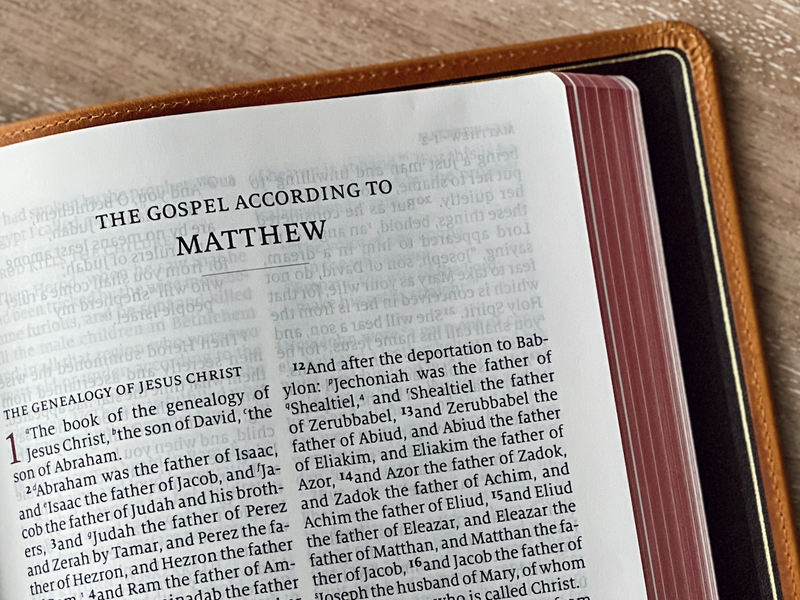
The Sequence of the Four Gospels

There is a scene in Prince Caspian , the second in C. S. Lewis’s Chronicles of Narnia that helps explain why it is we have four Gospels, that is four accounts of the Good News of Jesus Christ—Matthew, Mark, Luke, and John. It is the account of Lucy’s longed-for experience…

by Jeff MeyersFebruary 9, 2008

Showing page 215 of 309

See all

Showing page 37 of 43

See all

Portion and Inheritance

Israel’s priests did not inherit land. Many lived in cities and they possessed the land immediately surrounding. But they did not get a separate plot when the land was divided. Yahweh said He was their inheritance (Numbers 18:19), and He said it chiastically: A. In the land you will not…

December 31, 2014
Theology

The Structure of Promising

Christoph Schwobel’s contribution to Justification in a Post-Christian Society is characteristically grand. Exploring what contribution Lutheranism can make to contemporary society, he focuses on central Lutheran concerns - promise and trust. His explanation of the grammar of promise is densely brilliant: “The central distinction between law and gospel only becomes…

December 31, 2014
Theology

God of Promise

Christoph Schwobel’s analysis of promising ( Justification in a Post-Christian Society ) opens out into a discussion of theology proper with a reference to Luther’s claim that God identifies Himself in Exodus 3:14 as the God who promises Himself, “so that this promise is God’s essence in relation to which…

December 31, 2014

We Have An Altar

“We have an altar, from which those who serve the tabernacle have no right to eat. For the bodies of those animals whose blood is brought into the holy place by the high priest as an offering for sin are burned outside the camp. Therefore Jesus also, that He might…

December 30, 2014
Reformation

Catholic in Reformed

In his study of Calvin’s Company of Pastors , Scott Manetsch estimates that “just under 5 percent of all excommunications” in Geneva were imposed because of “Catholic behavior” (203). By this phrase, he refers to “instances where people voluntarily aligned themselves with some dimension of Roman Catholic faith or practice,…

December 30, 2014
Economics

Invisible Hand

Adam Smith wrote, briefly in several places, of an invisible hand that guided economic life. The work of this invisible hand was to bend self-interested actions to socially beneficent ends. As Smith wrote in The Wealth of Nations : “By preferring the support of domestic to that of foreign industry,…

December 29, 2014

Showing page 481 of 2212

Browse by Category

In Medias Res

Your weekly digest for all things Theopolis.

Donate

Theopolis is nearly 100% donor-supported. Consider joining us on our mission.