Theopolis Logo

Writing

Explore our collection of theological essays, biblical studies, and reflections on faith and culture.

See all
lukasz-lada-q7z-aulhpaw-unsplash
Ascension

The Son of Man in the Clouds | Part 1

References to the Son of Man coming on the clouds occur five times in the Synoptic Gospels. Three times such expressions appear in the parallel accounts of the Olivet Discourse (Matthew 24:30; Mark 13:36; Luke 21:27). Then, in parallel accounts of Jesus’ trial before the leaders of Israel, such expressions…

by Ralph Allan SmithMarch 3, 2020

pierre-bamin-emimj3r5nc4-unsplash-2
Biblical Studies

The New Torahs

Just what the difference is in the work of the Holy Spirit in the Old Testament and the New Testament is a question not so easily answered. The distinction is often said to be that in the Old Testament the Holy Spirit is on the believer, but in the New…

by Richard BledsoeFebruary 25, 2020
8v66_fp_v1678_wide-84d72f58b250a6518de45d8bbfa3fe786c82443b-s800-c85
Movies

1917: A Visible Word

1. Introduction You should think of 1917 at church on Sunday. Why? Let me explain. There's one film every Oscar season which everyone seems to have watched—your parents, your colleagues, even your pastor. This year, it's 1917— Sam Mendes' WW1 epic following two British Tommies on a seemingly impossible quest…

by Rhys LavertyFebruary 18, 2020
robert-bye-6plb5skwiiy-unsplash
Immigration

Greater Israel

This piece was originally part of the Bowyer response to the Theopolis series surrounding Professor McDermott’s essay, “Rethinking Israel.” For the sake of brevity, it was removed from the initial response, to be published as a standalone piece. As we’ve argued previously , we are strongly supportive of the right…

by Jerry and Charles BowyerFebruary 11, 2020
screen-shot-2020-02-04-at-9-37-13-am
Matthew

Matthew the Tax Collector

Richard Bauckham’s groundbreaking work, Jesus and the Eyewitnesses: The Gospels as Eyewitness Testimony , is profoundly insightful, but the message of the book is hampered by the presupposition of Marcan priority. Ironically the place where this assumption perhaps does its most damage is in Bauckham’s discussion of the apostle Matthew…

by Ralph Allan SmithFebruary 4, 2020
reformation960
Good Works

Faith as the Highest Work

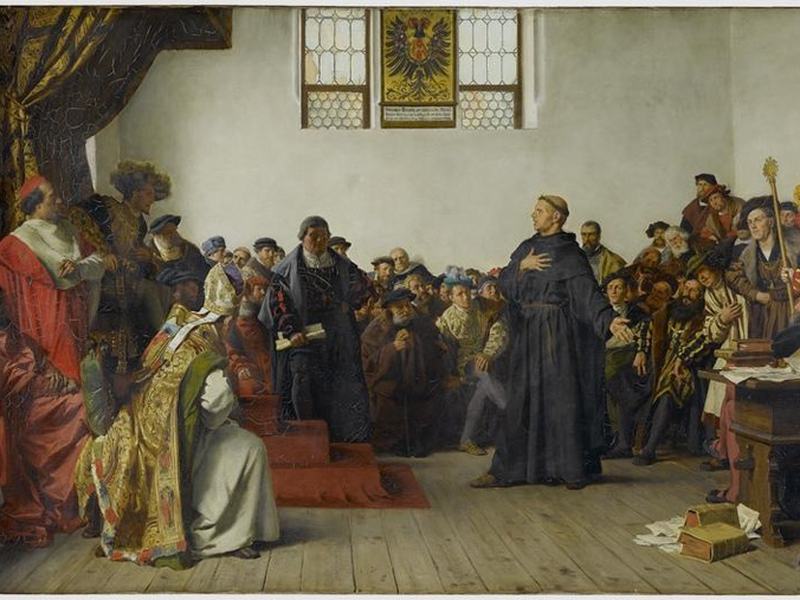
The Protestant Reformation was defined by certain clarifying disagreements between the medieval Church and those who came to be known as Protestant Reformers. Chief among these was the nature of justification: whether one was justified by works, or by faith and works, or—as Martin Luther contended—by faith alone. Now over…

by Alexander WhitakerJanuary 28, 2020

Showing page 70 of 309

See all
See all
History

Table Manners and Individualism

Elias notes that table manners reflect social relations more generally: “People who ate together in the way customary in the Middle Ages, taking meat with their fingers from the same dish, wine from the same goblet, soup from the same pot or the same plate . . . - such…

September 26, 2006
History

The Blasphemous Fork

Elias again: “In the eleventh century a Venetian doge married a Greek princess. In her Byzantine circle the fork was clearly in use. At any rate, we hear that she lifted food to her mouth ‘by means of little gold forks with two prongs.’ “This gave rise in Venice to…

September 26, 2006
History

Middle Class Counter-Enlightenment

Elias suggests that the blossoming of German literature in the late 18th century was largely led by middle-class writers and thinkers whose tastes and styles ran directly counter to the Francophile culture of Frederick’s court: “This German literary movement, whose exponents included Klopstock, Herder, Lessing, the poets of Sturm und…

September 25, 2006
Literature

Barbarous Shakespeare

A couple of weeks ago, I quoted Frederick the Great’s judgment that Shakespeare’s plays were fit only for “savages of Canada,” what with their “jumble of lowliness and grandeur, of buffoonery and tragedy,” their sins “against all the rules of the theatre, rules which are not at all arbitrary.” Frederick…

September 25, 2006

Structural and other notes on 1 John 1:5-2:11

A few scattered notes on this section of John’s first epistle. 1) There is a repeated emphasis on the contrast between word and action, word and walk. Three times John uses the clause “if we say that” (1:6, 8, 10), and another three times he uses “the one who says”…

September 25, 2006
Uncategorized

Sermon notes

INTRODUCTION John’s gospel is about the character of God: He proclaims that God is light, and has no darkness at all (1:5). This gospel comes with the demand to walk in the light (1:6). What does that mean? THE TEXT “This is the message which we have heard from Him…

September 25, 2006

Showing page 1787 of 2212

Browse by Category

In Medias Res

Your weekly digest for all things Theopolis.

Donate

Theopolis is nearly 100% donor-supported. Consider joining us on our mission.