
Theopolis Logo

Writing

Explore our collection of theological essays, biblical studies, and reflections on faith and culture.

See all
kiwihug-l4gw27xzn1i-unsplash
Hermeneutics

Beginning and New Beginning in Luke

Although the events are, of course, not perfectly parallel, Luke in his gospel intends us to connect Jesus’ birth from the womb and His re-birth from the tomb. Luke 1:27 introduces us to Joseph and in verse 30 we learn that his betrothed wife was named Mary. An angel appeared…

by James B. JordanDecember 28, 1996
screenshot-2023-08-30-at-11-50-23-am
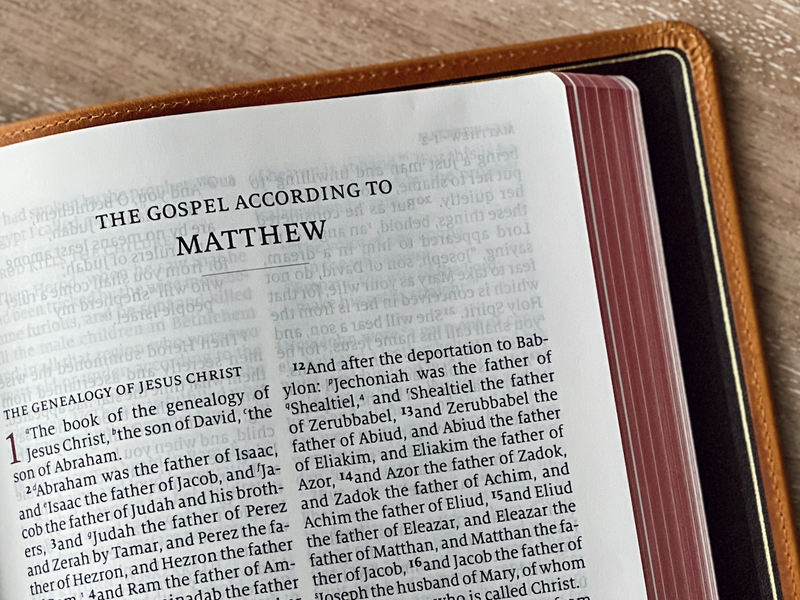
Matthew

A Note on Matthew

The apostle Matthew is also known as Levi son of Alphaeus. While not much is said about this man, the few things that are told us are significant. Matthew in Greek is Matthaios and comes from the Hebrew name Mattithiah, or Mattith-Yah, "Gift of Yah(weh)." Matthew’s other name is Levi,…

by James B. JordanDecember 28, 1996

aaron-burden-qjdzyt_k8xg-unsplash
Biblical Horizons

Twelve Fundamental Avenues of Revelation (Part 1)

Theologians often speak of "special" and "general" revelation, or of "natural" and "supernatural" revelation, or of "word" and "deed" revelation. While there are many worthwhile insights in these discussions, particularly in the discussions in Cornelius Van Til’s Introduction to Systematic Theology , I have not found any that satisfied my…

by James B. JordanDecember 28, 1996
jan-kahanek-g3o5ztrk2e4-unsplash
Ezekiel

Countdown to Exile IV: Ezekiel and the Structure of History

Ezekiel’s 430 Years In Ezekiel 4, the prophet is told to begin his ministry by setting up a model of Jerusalem and lying on his side and prophesying against it. He is to do this for 430 days, a day for a year. 390 days are against "Israel," and 40…

by James B. JordanDecember 28, 1996

img_7664
Biblical Horizons

The Oddness of the Feast of Booths

The Feast of Ingathering in the seventh month of the Sinaitic calendar is also called the Feast of Sukkoth, of Booths, also called Feast of Tabernacles. I have usually called it by that last phrase, and it is the most common today; but there is a problem: A tabernacle is…

by James B. JordanDecember 28, 1996

sixteen-miles-out-ki3hr9t8t7a-unsplash
Ezekiel

Countdown to Exile III: Warnings Against False Hopes

The End of Jehoiakim’s Reign We have seen that Jehoiakim rejected Jeremiah’s prophetic warnings at the beginning of his reign. Let us now make a year-by-year survey of his reign down to its end. In the spring of 605 BC, Nebuchadnezzar defeated the Egyptians at Carchemish. In the summer, he…

by James B. JordanNovember 28, 1996

Showing page 261 of 309

See all
See all
Literature

The meaning of “Literature”

Michael Hattaway writes, in an introduction to Early Modern English literature (Blackwell, 2005), “A primary difference between Renaissance and modern concepts of writing involves meanings for ‘literature’ and for ‘fiction.’ As surviving library catalogues reveal, contemporaries of Donne and Shakespeare did not recognize the groupings that determine the display of…

May 12, 2007

Anointed with clay

It’s significant that Jesus is said to “anoint” the blind man’s eyes with the clay-and-spittle (John 9:11). We wouldn’t normally think of clay as a promising material to “anoint” someone with, but this is the way that the man describes Jesus’ action. The word is often associated with the work…

May 12, 2007

Let there be light

In John 9, Jesus makes an allusion to the creation story when He explains to His disciples the reasons for the blind man’s blindness. The man is not blind because of his own sin, or his parents’ sins, but instead so that the work of God might be displayed in…

May 12, 2007
Media

Instruments of torture

The “Middle Ages only had thumb screws, not the media.” -Karl Kraus, early 20th century Viennese writer

May 11, 2007
History

Rites Controversy

During the seventeenth century, the church grew rapidly in China. According to Chan Kei Thong, “In 1640, three decades after [Matteo] Ricci died, there were 60,000 to 70,000 Catholic converts; by 1651, their numbers had more than doubled to 150,000. By 1664, the figure had ballooned to at least 254,980.…

May 11, 2007
History

True Kingship

During the reign of Tang, the founder of the Shang Dynasty (1766 B.C.), China suffered a seven-year drought. Someone suggested that a human sacrifice was necessary. Chan Kei Thong tells the story: “Tang appointed a day for this to be done, and a great multitude gathered for the unprecedented event.…

May 11, 2007

Showing page 1681 of 2212

Browse by Category

In Medias Res

Your weekly digest for all things Theopolis.

Donate

Theopolis is nearly 100% donor-supported. Consider joining us on our mission.
