Theopolis Logo

Writing

Explore our collection of theological essays, biblical studies, and reflections on faith and culture.

See all
kiwihug-l4gw27xzn1i-unsplash
Hermeneutics

Hermeneutical Polytheism

A couple of decades ago, when I was a young Reconstructionist (instead of a middle-aged post-Reconstructionist), I coined the phrase "political polytheism" to describe how modern evangelical Christians approach matters of social law and politics. Christians want the Bible for Church and family life, but turn to other gods for…

by James B. JordanJanuary 28, 1996

jan-kahanek-g3o5ztrk2e4-unsplash
Biblical Horizons

Concerning Contracts and Covenants

Gary North has from time to time taken note of some of the differences between contracts and covenants. For him, one of the most important is the oath-character of a covenant. Naturally, the English terms "contract" and "covenant" can be used with varying nuances by different writers, and their zone…

by James B. JordanJanuary 5, 1996
hebrew-manuscript-6
Biblical Studies

Rethinking the Order of the Old Testament

The Book of Chronicles is the last book in the Hebrew Canon of the Old Testament. The word "canon" means "authoritative list" when used in connection with the Bible. What we call the Hebrew Canon consists of 24 books arranged in three major divisions: the Law, the Prophets, and the…

by James B. JordanDecember 28, 1995
skyler-gerald-akljfvj5ym4-unsplash
Biblical Studies

At The Center of the Book of Kings

by: Peter Leithart and James Jordan The Book of Kings is structured chiastically, or concentrically. To see this clearly, we start in the middle and work our way outward. 2 Kings 3–7 record the central events of the ministry of Elisha. Elisha makes his first appearance in 1 Kings 19:19-21,…

by Peter LeithartNovember 5, 1995
lili-popper-lu15z1m_kfm-unsplash
Judges

Dynastic Aspirations in the Book of Judges

(The following is a supplement to my book, God’s War Against Humanism , a study of the book of Judges, available from Biblical Horizons for $20.00 – a photocopy of the original book, which is now out of print). The turning point in the book of Judges is 8:22-28. Here…

by James B. JordanNovember 5, 1995
james-coleman-orks2dpueo0-unsplash
Biblical Horizons

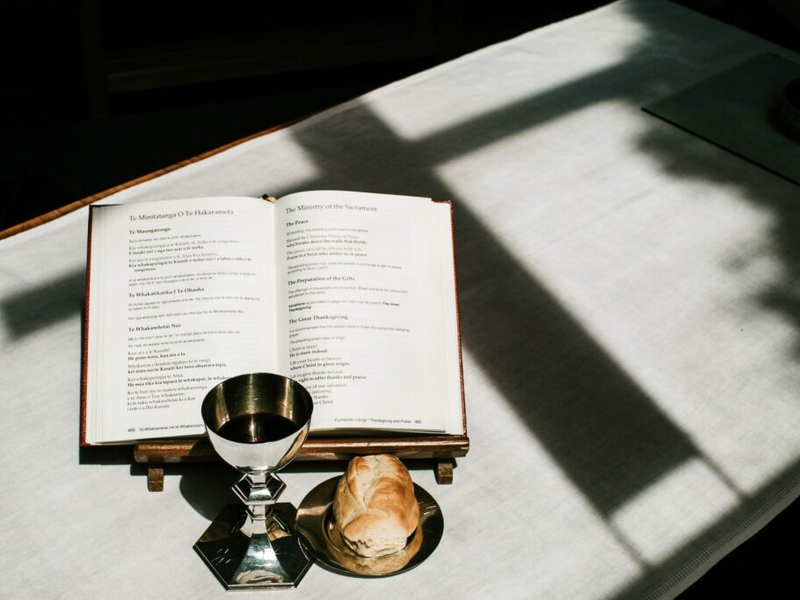
Doing the Lord’s Supper

From time to time I am asked how I think the Lord’s Supper should be done. This essay is my response to that question. To start with, we should agree that the Lord’s Supper is the only ritual we are obligated to do in the New Covenant on a routine…

by James B. JordanNovember 5, 1995

Showing page 268 of 309

See all

Showing page 5 of 43

See all
History

Table Manners and Individualism

Elias notes that table manners reflect social relations more generally: “People who ate together in the way customary in the Middle Ages, taking meat with their fingers from the same dish, wine from the same goblet, soup from the same pot or the same plate . . . - such…

September 26, 2006
History

The Blasphemous Fork

Elias again: “In the eleventh century a Venetian doge married a Greek princess. In her Byzantine circle the fork was clearly in use. At any rate, we hear that she lifted food to her mouth ‘by means of little gold forks with two prongs.’ “This gave rise in Venice to…

September 26, 2006
History

Middle Class Counter-Enlightenment

Elias suggests that the blossoming of German literature in the late 18th century was largely led by middle-class writers and thinkers whose tastes and styles ran directly counter to the Francophile culture of Frederick’s court: “This German literary movement, whose exponents included Klopstock, Herder, Lessing, the poets of Sturm und…

September 25, 2006
Literature

Barbarous Shakespeare

A couple of weeks ago, I quoted Frederick the Great’s judgment that Shakespeare’s plays were fit only for “savages of Canada,” what with their “jumble of lowliness and grandeur, of buffoonery and tragedy,” their sins “against all the rules of the theatre, rules which are not at all arbitrary.” Frederick…

September 25, 2006

Structural and other notes on 1 John 1:5-2:11

A few scattered notes on this section of John’s first epistle. 1) There is a repeated emphasis on the contrast between word and action, word and walk. Three times John uses the clause “if we say that” (1:6, 8, 10), and another three times he uses “the one who says”…

September 25, 2006
Uncategorized

Sermon notes

INTRODUCTION John’s gospel is about the character of God: He proclaims that God is light, and has no darkness at all (1:5). This gospel comes with the demand to walk in the light (1:6). What does that mean? THE TEXT “This is the message which we have heard from Him…

September 25, 2006

Showing page 1787 of 2212

Browse by Category

In Medias Res

Your weekly digest for all things Theopolis.

Donate

Theopolis is nearly 100% donor-supported. Consider joining us on our mission.