
Theopolis Logo

Writing

Explore our collection of theological essays, biblical studies, and reflections on faith and culture.

See all
kiwihug-l4gw27xzn1i-unsplash
Hermeneutics

Beginning and New Beginning in Luke

Although the events are, of course, not perfectly parallel, Luke in his gospel intends us to connect Jesus’ birth from the womb and His re-birth from the tomb. Luke 1:27 introduces us to Joseph and in verse 30 we learn that his betrothed wife was named Mary. An angel appeared…

by James B. JordanDecember 28, 1996
screenshot-2023-08-30-at-11-50-23-am
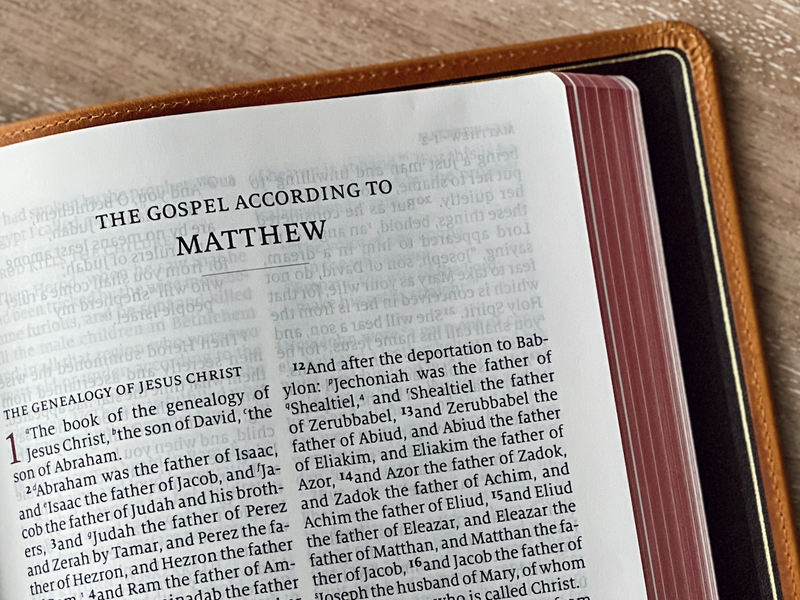
Matthew

A Note on Matthew

The apostle Matthew is also known as Levi son of Alphaeus. While not much is said about this man, the few things that are told us are significant. Matthew in Greek is Matthaios and comes from the Hebrew name Mattithiah, or Mattith-Yah, "Gift of Yah(weh)." Matthew’s other name is Levi,…

by James B. JordanDecember 28, 1996

aaron-burden-qjdzyt_k8xg-unsplash
Biblical Horizons

Twelve Fundamental Avenues of Revelation (Part 1)

Theologians often speak of "special" and "general" revelation, or of "natural" and "supernatural" revelation, or of "word" and "deed" revelation. While there are many worthwhile insights in these discussions, particularly in the discussions in Cornelius Van Til’s Introduction to Systematic Theology , I have not found any that satisfied my…

by James B. JordanDecember 28, 1996

jan-kahanek-g3o5ztrk2e4-unsplash
Ezekiel

Countdown to Exile IV: Ezekiel and the Structure of History

Ezekiel’s 430 Years In Ezekiel 4, the prophet is told to begin his ministry by setting up a model of Jerusalem and lying on his side and prophesying against it. He is to do this for 430 days, a day for a year. 390 days are against "Israel," and 40…

by James B. JordanDecember 28, 1996

img_7664
Biblical Horizons

The Oddness of the Feast of Booths

The Feast of Ingathering in the seventh month of the Sinaitic calendar is also called the Feast of Sukkoth, of Booths, also called Feast of Tabernacles. I have usually called it by that last phrase, and it is the most common today; but there is a problem: A tabernacle is…

by James B. JordanDecember 28, 1996

sixteen-miles-out-ki3hr9t8t7a-unsplash
Ezekiel

Countdown to Exile III: Warnings Against False Hopes

The End of Jehoiakim’s Reign We have seen that Jehoiakim rejected Jeremiah’s prophetic warnings at the beginning of his reign. Let us now make a year-by-year survey of his reign down to its end. In the spring of 605 BC, Nebuchadnezzar defeated the Egyptians at Carchemish. In the summer, he…

by James B. JordanNovember 28, 1996

Showing page 261 of 309

See all

Showing page 5 of 43

See all
Politics

Arnold’s Campaign

From the radio reports I hear, it seems that Arnold’s campaign is an extension of his movie career. At one stop, he unveils a bus bearing his mug, and buses for the press labeled “Predators.” At another stop, he talks about taxes, and says that in the movies he destroys…

October 3, 2003

Edwards on Samson

In his Miscellanies , Edwards has some fascinatingly positive things to say about Samson. For example: In Judg xvi. 1, 2, we have an account how Samson loved a harlot, and from his love to her exposed himself to be compassed round by his enemies. So the prophecies represent the…

October 3, 2003

Images of Divine Things

A few quotations from Edwards’ “Images of Divine Things” (1728): “When we travail up an hill ‘tis against our natural tendency and inclination, which perpetually is to descent; and therefore we can’t go on ascending without labor and difficulty. But there arises a pleasant prospect to pay us for our…

October 3, 2003
American Religion

Noll on Edwards

Mark Noll’s account of Edwards’s role in the undermining of the Puritan “sacred canopy” in New England, in his recent book America’s God , is an important analysis of one phase in the rise of American religion. According to Noll, the pattern goes something like this: 1) The Puritans had…

October 2, 2003
History

Edwards and Beowulf

Thinking through an upcoming lecture on Edwards, I had a Borgesian moment: In 1731, there was a fire at the Cottonian library in England that nearly destroyed the single manuscript containing the Anglo-Saxon poem Beowulf . In the same year, Edwards preached a controversial sermon at his church in Northampton,…

October 2, 2003

Polupragmosune

Every great civilization has some equivalent of what the fifth-century (BC) Athenians called polupragmosune . As defined by William Arrowsmith, that word “connotes energy, enterprise, daring, ingenuity, originality, and curiosity; negatively it means restless instability, discontent with one’s lot, persistent and pointless busyness, meddling interference, and mischievous love of novelty.”…

October 2, 2003

Showing page 2188 of 2212

Browse by Category

In Medias Res

Your weekly digest for all things Theopolis.

Donate

Theopolis is nearly 100% donor-supported. Consider joining us on our mission.