Theopolis Logo

Writing

Explore our collection of theological essays, biblical studies, and reflections on faith and culture.

See all
tanner-mardis-xuxghzhibn4-unsplash-1-2
Biblical Studies

Tweets-turned-Notes on the Bible’s Chronology

Summary In what follows, I will consider the “year-stamps” employed in Scripture, i.e., statements of the form, “Such-and-such an event took place in the Xth year of Y.” In the process, I will suggest some ways in which the Biblical narrative might relate to events in the extra-Biblical world, though…

by James BejonJuly 16, 2019
durer-prodigal-son-2
Luke

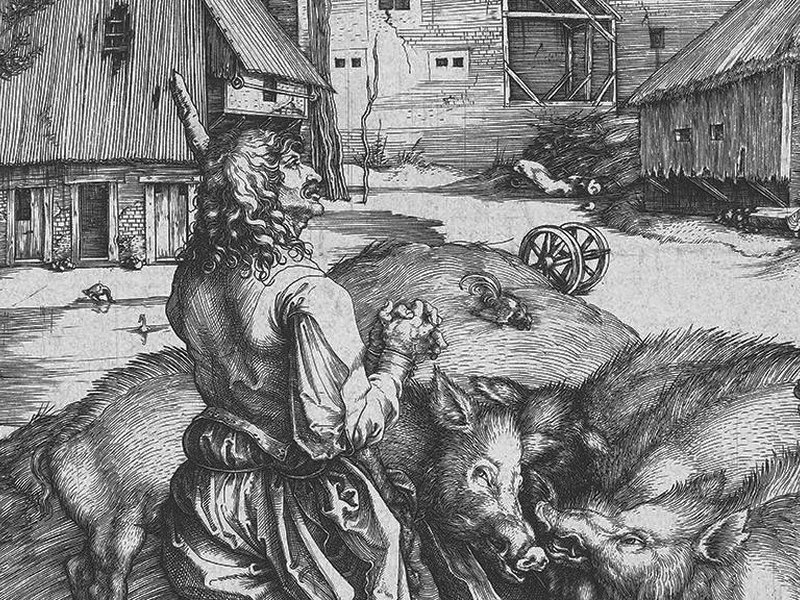
Perspectives on the Prodigal, (Part 2)

In the first essay on the parable of the Prodigal Son, I suggested that the problems commentators and others encounter in interpreting Jesus three-part parable are not accidental. These are not just problems in our ignorance of cultural background. They are intentional features of the stories —stories designed to poke…

by Ralph Allan SmithJuly 11, 2019
durer-prodigal-son-2
Luke

Perspectives on the Prodigal, (Part 1)

The story of the Prodigal Son is perhaps the most well-known story in the Bible. As others have observed, it may also be one of the most misunderstood. In two short essays, I will point out features of this story that are commonly neglected, aspects of Jesus’ parable that might…

by Ralph Allan SmithJuly 9, 2019
de-rijke-man-en-de-arme-lazarus-by-jacopo-da-ponte-16th-century
Luke

Lazarus and the Rich Man

The parable of Lazarus and the nameless rich man is not an independent story. It is part of a long context that begins in Luke 15:1, where Jesus is eating with tax collectors and sinners and the scribes and Pharisees grumble. In response to their hardheartedness, Jesus tells a three-part…

by Ralph Allan SmithJuly 4, 2019
aaron-burden-uynrnfdkjwg-unsplash
Luke

Everybody has Dropsy - Luke 14:1-24

The Bible is written so that even when a reader cannot pick up on what might be deeper or more detailed aspects of a text, there is virtually always a message to be heard. In the ancient world, where the “reader” of Scripture would likely be a church official facing…

by Ralph Allan SmithJuly 2, 2019
communion
Biblical Theology

Fruit Trees and Grain Plants

The distinction between garden (or vineyard) and field begins in Genesis 2. This relates to the ordering of the formless world. Plants of the field are contrasted with the garden planted by God in Genesis 2:5&8. Later on, under the Old Covenant the Israelites will be required to keep their…

by James B. JordanJune 27, 2019

Showing page 77 of 309

See all

Showing page 6 of 43

See all

Devil’s opportuity

“Do not leg the sun go down on your anger, and do not give the devil an opportunity.” It sounds spooky and bizarre: Are we in danger of being haunted by some anger-demon? Once we remember that “diabolos” means “slanderer,” it’s no longer the stuff of horror movies. It’s a…

May 1, 2006
History

Medievalism and theory

Bruce Holsinger’s book, The Premodern Condition , is reviewed in the April 14 issue of TLS. Holsinger is tracing the rise of theory in France of the 1960s, and shows that the avant garde was “surprisingly heavily indebted to medievalism.” He describes their relationship to the medieval past as “sacramental”…

May 1, 2006

Eucharistic meditation, Third Sunday of Easter

2 Kings 17:23: So Israel was carried away into exile. In this morning’s sermon, I suggested that we should read the conclusion of the history of the North as part of the gospel story. This passage highlights the fact that Israel’s failure was a failure to believe God, a failure…

April 30, 2006

Exhortation, Third Sunday of Easter

Easter is about faith, because by His resurrection Jesus has been installed as the mediator, the firmament boundary between God and man. In the Old Testament, priests served as mediators, who stood in the middle between God and man. Organized in a ring around Yahweh’s tent, the priests served as…

April 30, 2006

Word and Water

Baptism, Luther says in his Small Catechism, is not water only, but water “comprehended in God’s word and connected with God’s command.” The following question asks what word constitutes the water as baptism, and cites Matthew 28: “Go ye therefore . . . ” That is, the word that constitutes…

April 29, 2006
History

War against Mimesis

Baillie quotes the opening lines of Rousseau’s Confessions , and notes that it, like Descartes’s cogito, is an “effort to avert attention from what Girard calls mimetic desire, the elimination of which is tantamount to the rejection of Christian anthropology. Rousseau begins his Confessions not with a prayer, but with…

April 29, 2006

Showing page 1848 of 2212

Browse by Category

In Medias Res

Your weekly digest for all things Theopolis.

Donate

Theopolis is nearly 100% donor-supported. Consider joining us on our mission.