Theopolis Logo

Writing

Explore our collection of theological essays, biblical studies, and reflections on faith and culture.

See all
little-girl
Children

Honor God With Your Body

I am making a new rule in our house! We are actually kind of skimpy on the house rules. I try very hard to keep things simple: love God, love others, be joyful. It’s not complicated to avoid discipline here. But I have found myself repeating this new rule over…

by Lindsey TollefsonApril 9, 2015
giotto-noli-me-3
John

The Gardener and the Beloved, (Part 3)

Click HERE for Part 2 The voice of Jesus transforms and changes Mary when she hears him speak her name. This is her last “turning.” So also the woman in the Song of Songs longs to hear the voice of her beloved. Let me see your face, let me hear…

by Jeff MeyersApril 6, 2015
giotto-noli-me-2
John

The Gardener and the Beloved, (Part 2)

Click HERE for Part 1. The details of this story call the attentive reader back to the drama of Solomon’s Song of Songs. And the Song of Song’s alludes to, ties us into the story of Adam and Eve in the Garden and the promise of a coming Messiah that…

by Jeff MeyersApril 4, 2015
easter-term-2015-2
Theopolis News

Easter Term, 2015

“The course was a paradigm shift for me,” said Jonathan Sedlak, a Milwaukee electrical contractor who attended Theopolis’s course on Revelation. “I am left with a book that is far more practical than it has ever seemed before.” Jonathan Anderson of Louisville, Kentucky found the course “refreshing.” “I finished with…

by TheopolisApril 2, 2015
psalm-singing
Genesis

Worship as Response: Liturgical Logic, (Part 1)

“It is only by participation in a rational, practice-based community that one becomes rational.” – Alasdair MacIntyre It may be perfectly clear to a chef why adding unsifted powdered sugar to a hot frosting is a bad idea. But for an amateur cook, this may be the kind of rule…

by Jonathan BarlowApril 2, 2015
giotto-noli-me
John

The Gardener and the Beloved, (Part 1)

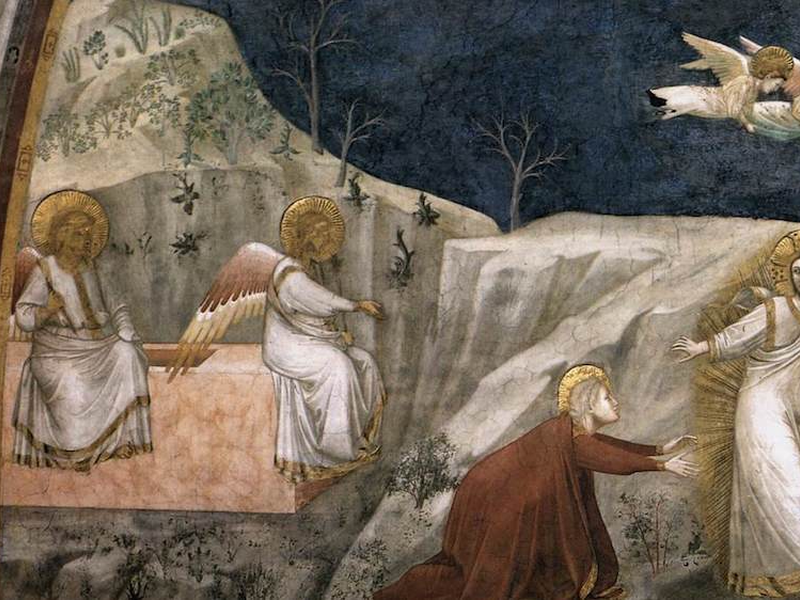
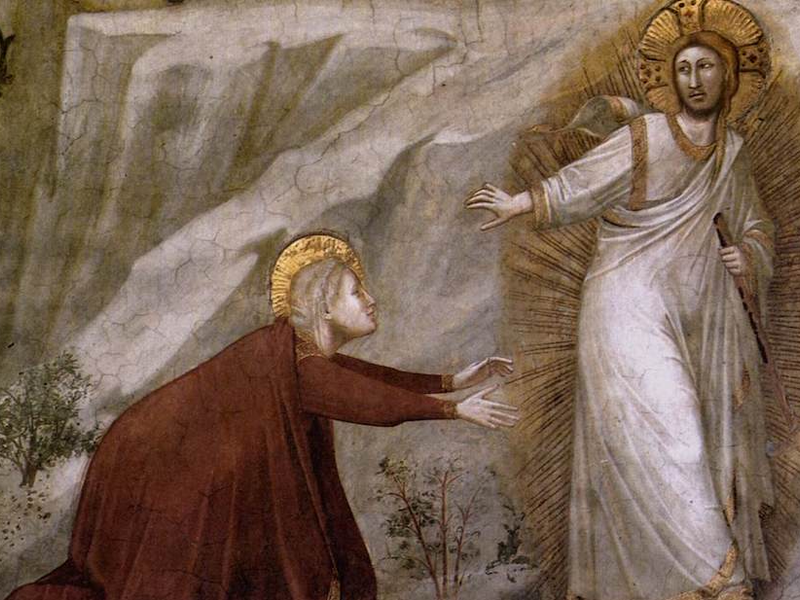
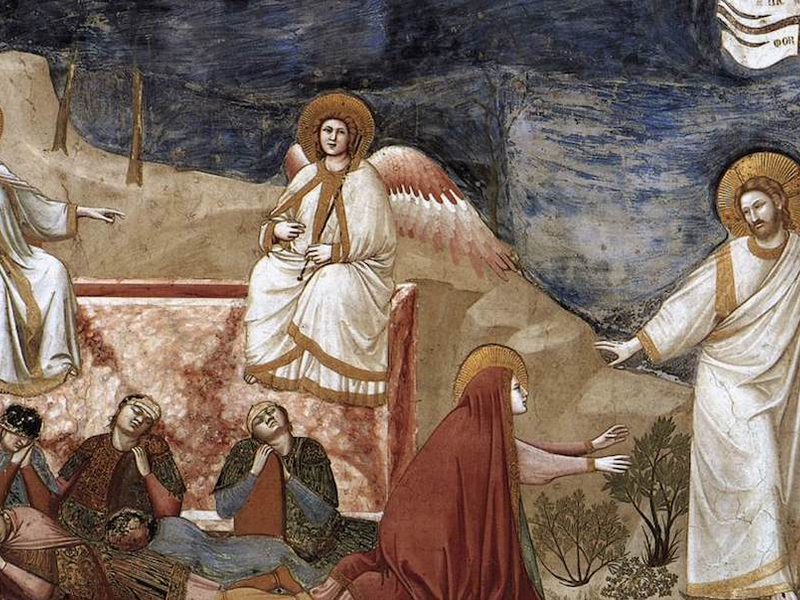
On a fresco in a chapel in Padua, Italy, there is a famous painting depicting the dramatic post-resurrection scene in John 20 with Mary and Jesus outside of the garden tomb. Giotto di Bondone painted it in the early 14th century. Jesus is striding from the tomb with a victor’s…

by Jeff MeyersApril 1, 2015

Showing page 156 of 309

See all

Showing page 7 of 43

See all

Devil’s opportuity

“Do not leg the sun go down on your anger, and do not give the devil an opportunity.” It sounds spooky and bizarre: Are we in danger of being haunted by some anger-demon? Once we remember that “diabolos” means “slanderer,” it’s no longer the stuff of horror movies. It’s a…

May 1, 2006
History

Medievalism and theory

Bruce Holsinger’s book, The Premodern Condition , is reviewed in the April 14 issue of TLS. Holsinger is tracing the rise of theory in France of the 1960s, and shows that the avant garde was “surprisingly heavily indebted to medievalism.” He describes their relationship to the medieval past as “sacramental”…

May 1, 2006

Eucharistic meditation, Third Sunday of Easter

2 Kings 17:23: So Israel was carried away into exile. In this morning’s sermon, I suggested that we should read the conclusion of the history of the North as part of the gospel story. This passage highlights the fact that Israel’s failure was a failure to believe God, a failure…

April 30, 2006

Exhortation, Third Sunday of Easter

Easter is about faith, because by His resurrection Jesus has been installed as the mediator, the firmament boundary between God and man. In the Old Testament, priests served as mediators, who stood in the middle between God and man. Organized in a ring around Yahweh’s tent, the priests served as…

April 30, 2006

Word and Water

Baptism, Luther says in his Small Catechism, is not water only, but water “comprehended in God’s word and connected with God’s command.” The following question asks what word constitutes the water as baptism, and cites Matthew 28: “Go ye therefore . . . ” That is, the word that constitutes…

April 29, 2006
History

War against Mimesis

Baillie quotes the opening lines of Rousseau’s Confessions , and notes that it, like Descartes’s cogito, is an “effort to avert attention from what Girard calls mimetic desire, the elimination of which is tantamount to the rejection of Christian anthropology. Rousseau begins his Confessions not with a prayer, but with…

April 29, 2006

Showing page 1848 of 2212

Browse by Category

In Medias Res

Your weekly digest for all things Theopolis.

Donate

Theopolis is nearly 100% donor-supported. Consider joining us on our mission.