Theopolis Logo

Writing

Explore our collection of theological essays, biblical studies, and reflections on faith and culture.

See all
31-03-0213
Hermeneutics

Apocalyptic Eyes

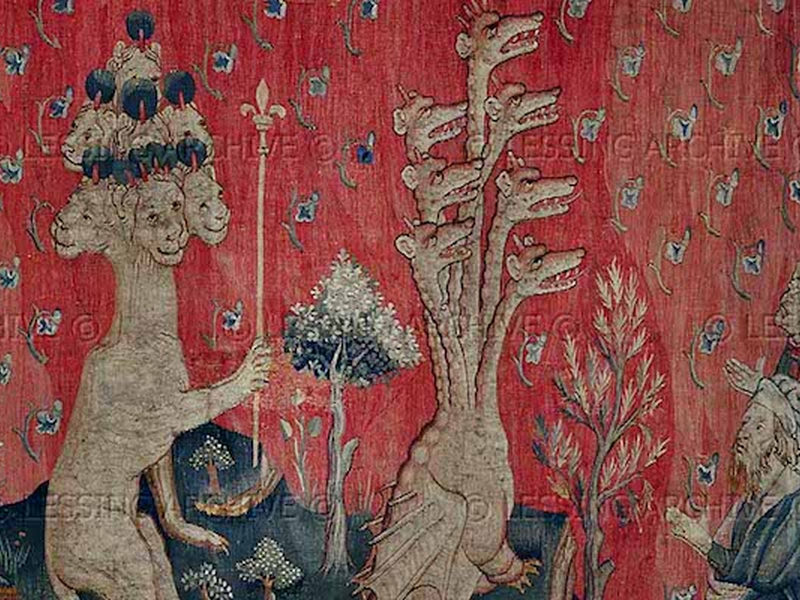
Flying scrolls. Red horses. Beasts coming out of the sea. Winged women. The list goes on. Apocalyptic literature in the Bible is like a cross between science fiction and Marvel comics. And the Bible has a fair bit of this sort of thing. Daniel sees visions in Babylon, Zechariah sees…

by Toby SumpterNovember 4, 2014

bhm-skyline-2
Theopolis News

New Name, New Look

Trinity House Institute has taken a new name, the Theopolis Institute. This striking new name expresses our unique vision and mission and captures the unified purpose behind all our specific programs and activities. We still have Bible, liturgy, and culture in our tagline. We still offer the same courses on…

by TheopolisNovember 4, 2014
istock_000012860926small
Atonement

Not Fearing the Devil

Adam Kotsko offers a socio-political variation on the Christus Victor atonement theory in his 2010 study, The Politics of Redemption: The Social Logic of Salvation . He does this by explaining "the devil" in terms of the Hegelian concept of "objective spirit," Geist . As Kotsko puts it, Geist "refers…

by Peter LeithartOctober 13, 2014
jez-timms-8muutamcwu4-unsplash
Leviticus

The Meaning of Sacrifice

Two factors keep Nahtali Meshel from discussing the meaning of sacrifice until late in his The "Grammar" of Sacrifice . The first has to do with the texts he draws from: "P says little about the meaning of its rituals" (174). The other has to do with the grammatical theory…

by Peter LeithartOctober 8, 2014
jez-timms-8muutamcwu4-unsplash
Leviticus

Praxemics

Chapter 5 of Naphtali Meshel's The "Grammar" of Sacrifice focuses on "praxemics," the physical actions of sacrificial ritual. Praxemes are constituted by six elements: an "atomact," an elementary physical act or gesture; an actor; an object that is acted up; a target for the action and often for the object…

by Peter LeithartOctober 6, 2014
markus-winkler-aid-xyrtlec-unsplash
Leviticus

Jugation and Hierarchy

Two chapters of Naphtali Meshel’s The “Grammar” of Sacrifice cover what he calls “jugation” and “hierarchies.” The first involves the addition of other materials to an animal offering. Jugates include wine, cereal, and oil that are added to the animals (zoemes) that are offered in sacrifice. Some jugates are coordinated…

by Peter LeithartOctober 1, 2014

Showing page 167 of 309

See all

Showing page 7 of 43

See all

Devil’s opportuity

“Do not leg the sun go down on your anger, and do not give the devil an opportunity.” It sounds spooky and bizarre: Are we in danger of being haunted by some anger-demon? Once we remember that “diabolos” means “slanderer,” it’s no longer the stuff of horror movies. It’s a…

May 1, 2006
History

Medievalism and theory

Bruce Holsinger’s book, The Premodern Condition , is reviewed in the April 14 issue of TLS. Holsinger is tracing the rise of theory in France of the 1960s, and shows that the avant garde was “surprisingly heavily indebted to medievalism.” He describes their relationship to the medieval past as “sacramental”…

May 1, 2006

Eucharistic meditation, Third Sunday of Easter

2 Kings 17:23: So Israel was carried away into exile. In this morning’s sermon, I suggested that we should read the conclusion of the history of the North as part of the gospel story. This passage highlights the fact that Israel’s failure was a failure to believe God, a failure…

April 30, 2006

Exhortation, Third Sunday of Easter

Easter is about faith, because by His resurrection Jesus has been installed as the mediator, the firmament boundary between God and man. In the Old Testament, priests served as mediators, who stood in the middle between God and man. Organized in a ring around Yahweh’s tent, the priests served as…

April 30, 2006

Word and Water

Baptism, Luther says in his Small Catechism, is not water only, but water “comprehended in God’s word and connected with God’s command.” The following question asks what word constitutes the water as baptism, and cites Matthew 28: “Go ye therefore . . . ” That is, the word that constitutes…

April 29, 2006
History

War against Mimesis

Baillie quotes the opening lines of Rousseau’s Confessions , and notes that it, like Descartes’s cogito, is an “effort to avert attention from what Girard calls mimetic desire, the elimination of which is tantamount to the rejection of Christian anthropology. Rousseau begins his Confessions not with a prayer, but with…

April 29, 2006

Showing page 1848 of 2212

Browse by Category

In Medias Res

Your weekly digest for all things Theopolis.

Donate

Theopolis is nearly 100% donor-supported. Consider joining us on our mission.