Theopolis Logo

Writing

Explore our collection of theological essays, biblical studies, and reflections on faith and culture.

See all
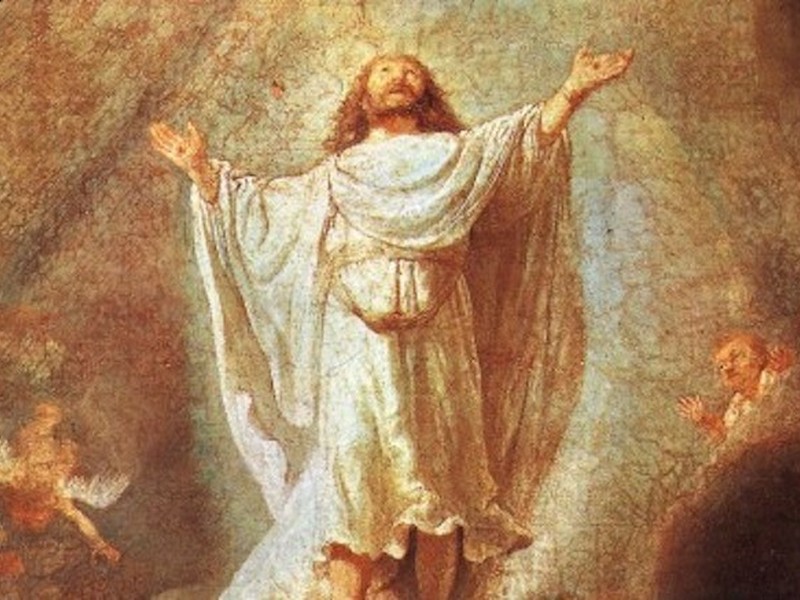
ascension-rembrandt
Ascension

Ascension and Eucharist

It’s a simple point, obviously biblical and creedal: Jesus of Nazareth ascended into heaven as the God-man, and He remains the God-man in all his specific particularity from now to the end. He is Jesus the Christ, the same yesterday, today, and forever. Duh! But Douglas Farrow shows in his…

by Peter LeithartMay 27, 2013

markus-winkler-aid-xyrtlec-unsplash
Theopolis News

Register for Trinity Term Class

You can now register for the very first Trinity House intensive class, "How to Read the Bible," taught by James Jordan and Peter Leithart. There will be a kick-off welcome for students on the evening of Sunday, August 25, and the class will be held at Trinity Presbyterian Church ,…

by Peter LeithartMay 22, 2013
chris-bair-ndczc5739ck-unsplash
Deuteronomy

Deuteronomy as Narrative-Law

This series of essays will address the food laws in Deuteronomy 14:1-21. To some, this may seem like a work of supererogation. After all, why should a Christian be interested in outdated “laws” from the book of Deuteronomy? I hope to show that meditation on this portion of Scripture is…

by Ralph Allan SmithMay 20, 2013
venice-la-distruzione-del-tempio-di-gerusalemme-francesco-hayez-gallerie-accademia-venice
Isaiah

Apocalyptic Patience

This essay was first published in 2011 in Credenda/Agenda . Isaiah 24 begins the section of Isaiah known as the “little apocalypse.” It’s a good name for this chapter. It’s a text of terror. The world is coming apart at the seams. The earth is emptied; and not only that,…

by Peter LeithartMay 15, 2013
sixteen-miles-out-al48tflf4e8-unsplash
Biblical Studies

Anti Anti-Supercessionism

This article was first published in 2010 in Credenda/Agenda . In recent years, mainstream theology has begun to recognize the disaster that followed from the Marcionism of classical liberalism. R. Kendall Soulen is a leading figure in efforts to restore the importance of the Old Testament to Christian theology. In…

by Peter LeithartMay 13, 2013
skyler-gerald-akljfvj5ym4-unsplash
Deuteronomy

Law and History: How to Read the Law of Moses

This is the last in a series of studies on Deuteronomy 22:30-23:8. In this series, I have offered an interpretation of Deuteronomy 22:30-23:8 which suggests that a simple surface reading of the text does not do justice to Moses’ or God’s intention, that the larger historical and legal context in…

by Ralph Allan SmithMay 8, 2013

Showing page 194 of 309

See all
See all
Uncategorized

Augustine, Secularist?

O’Donovan makes the point, against Markus, that Augustine does not describe the earthly city as a combination of private ends and public or common utility. This would be a secular system, which leaves ends to individual citizens as they make use of common goods. O’Donovan says Augustine does something like…

February 28, 2008

Analogia Entis

Von Balthasar again: Creation is God’s free decision. There need not be a world. “But if he decides to create a world, then of course this decision can only take the form of the analogy of being, which is grounded in God’s very ‘essence’ itself. Created being must be by…

February 27, 2008

Revelation and nature

Von Balthasar says that grace presupposes a nature that is free from revelation: “If there is to be revelation, then it can only proceed from God to a creature - to a creature that precisely as a creature does not include revelation in its conceptual range.” Van Til is much…

February 27, 2008

Servant and friend

Von Balthasar puts the nature/grace distinction in simple terms, and ones that resonate with certain strains of Reformed theology: “It belongs to the very essence of the creature that it must indeed be creature, but not a creature who has been exalted to a new order of grace: by nature…

February 27, 2008

Gratuity and creatureliness

Rahner says that God’s self-gift “can and must” be an “ever astounding wonder, the unexpected, the unexacted gift.” In an extended footnote, he explains that this “can and must” means both that God’s self-communication is in fact unexacted, and that it must be of necessity . On the latter point:…

February 27, 2008

Self-communication

Rahner re-describes the nature/grace problem in terms of God’s self-communicating love, which is the final cause of creation and the first intention of God: “Everything else exists so that this one thing might be: the eternal miracle of infinite Love.” (Good Edwardsian supralapsarian, he.) But for Rahner, as for every…

February 27, 2008

Showing page 1560 of 2212

Browse by Category

In Medias Res

Your weekly digest for all things Theopolis.

Donate

Theopolis is nearly 100% donor-supported. Consider joining us on our mission.









