Theopolis Logo

Writing

Explore our collection of theological essays, biblical studies, and reflections on faith and culture.

See all
or
Abortion

Political Hermeneutics: The Argument From Silence, Part 2

Click HERE for part 1. III This leads to a further question. I have argued that silence cannot by itself establish a Scriptural principle, but does Scripture’s silence carry any weight in itself? Does the fact that something is unbiblical in a weak sense tell us anything at all? In…

by Peter LeithartMarch 13, 1990

hebrew-manuscript-6
Biblical Chronology

Groping Through the Gaps

Although nowadays gap theories are associated with dispensationalism, it was not always so. In the nineteenth century, scholars from a variety of backgrounds (Anglican, Reformed, and proto-fundamentalist) seem to have become fascinated by gaps. If you are not familiar with what I am talking about, this newsletter will acquaint you…

by James B. JordanFebruary 26, 1990
or
Abortion

Political Hermeneutics: The Argument from Silence, Part 1

If the debate over Operation Rescue has proven anything, it has proven that there is absolutely no consensus among evangelicals in general, or among "reconstructionists" in particular, about how to use the Bible to judge political actions and movements. Each side of the debate claims biblical authority for its position,…

by Peter LeithartFebruary 13, 1990
49980-nicolas_poussin_-_the_judgment_of_solomon_-_wga18330-800w-tn
Biblical Studies

Advice From a Sojourner, Part 4

Two things I asked of Thee, Do not refuse me before I die: Keep deception and words of falsehood far from me, Give me neither poverty nor riches, Feed me with the food that it my portion, Lest I be full and deny Thee, And say, "Who is the LORD?"…

by James B. JordanFebruary 2, 1990
image-2
Biblical Horizons

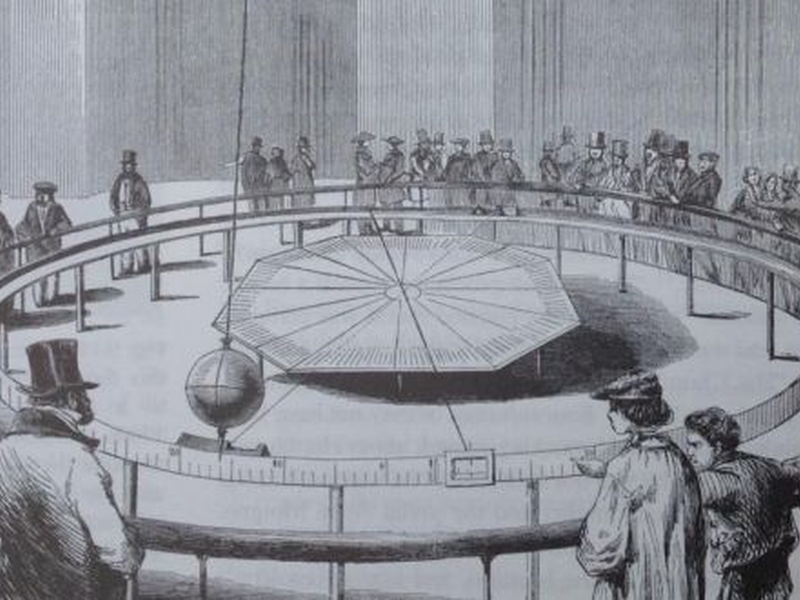
Foucault’s Pendulum

Umberto Eco’s "The Name of the Rose" was certainly one of the best literary works of the past decade, though the film version hardly measured up to it. Now Eco has given us a new novel, "Foucault’s Pendulum." Like Rose, Foucault’s Pendulum reflects on the limitations of human knowledge, and…

by James B. JordanJanuary 26, 1990
tanner-mardis-xuxghzhibn4-unsplash-1-2
Biblical Studies

What Is “Interpretive Maximalism”?

From time to time people ask me about "interpretive maximalism." They want to know what it is, and sometimes want to know if it represents some departure from the Reformed grammatico-historical, Biblico-theological approach to the Bible. I have something of a problem with these questions, because "interpretive maximalism" is not…

by James B. JordanJanuary 26, 1990

Showing page 305 of 309

See all
See all

Ideology of the Picturesque

In The Historical Austen , William Galperin notes that Austen understood that certain kinds of realistic art or aesthetics could naturalize and “realize” what is really only an ideological construct. And he notes the somewhat surprising political ramifications of such aesthetic theories. He points to the theory of the picturesque,…

August 11, 2007

Root of bitterness

Watch that no root of bitterness grow up, Hebrews 12:15 warns. What’s a root of bitterness? Sounds like someone who’s bitter in the church. But Deuteronomy 29:18 uses a similar phrase to describe those who turn aside from Yahweh to serve other gods. This fits the context of Hebrews very…

August 9, 2007

Cursed joylessness

Yahweh curses Israel for breaking covenant. More specifically, Israel will become a sign and wonder to the nations “because you did not serve Yahweh your God with joy and a glad heart, for the abundance of all things” (Deuteronomy 28:47). What satisfies God is not just obedience, but joyful obedience.

August 9, 2007
Literature

Austen and the Stuarts

In her history of England, written at 15, Austen declares her favor toward the Stuart dynasty. She writes comically, but beneath the fun she is in earnest. Irene Collins notes that her mother, Cassandra Leigh “liked to remember that her ancestor Thomas Leigh had received a baronetcy for welcoming Charles…

August 7, 2007
Literature

Jane Austen and the Presbyterians

Austen was a life-long Anglican, born to a C of E clergyman, with many C of E ministers in her extended family and ancestry and circle of acquaintances. Irene Collins notes, “Her maternal grandfather and her great uncle had been clergymen; so were her godfather, one of her uncles, two…

August 7, 2007
Literature

Christian politeness

Vicesimus Knox (1752 - 1821) - English minister, essayist, and campaigner for the end of war - was educated at St. John’s Oxford, where George Austen (1731-1805), Jane’s father, was a student and tutor in classics, and Knox later became Headmaster of Tonbridge School, which George Austen had attended as…

August 7, 2007

Showing page 1650 of 2212

Browse by Category

In Medias Res

Your weekly digest for all things Theopolis.

Donate

Theopolis is nearly 100% donor-supported. Consider joining us on our mission.