Theopolis Logo

Writing

Explore our collection of theological essays, biblical studies, and reflections on faith and culture.

See all
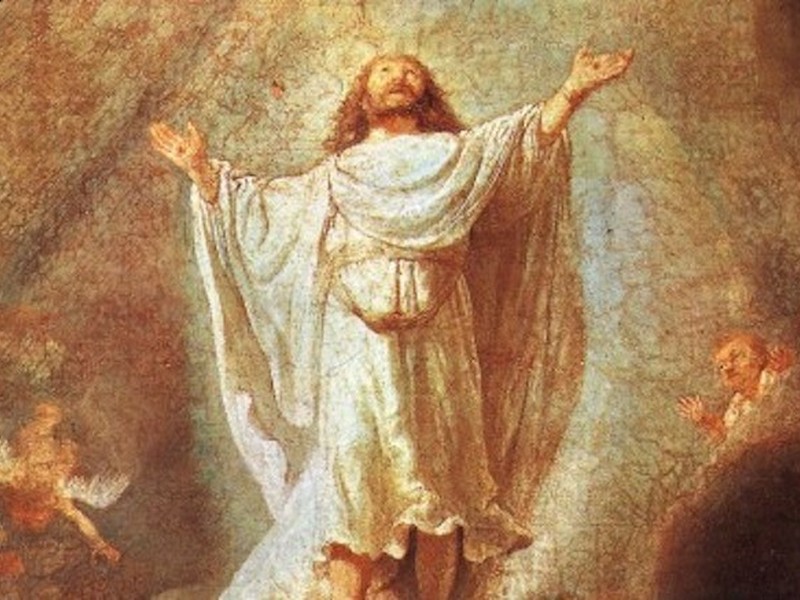
ascension-rembrandt
Ascension

Ascension and Eucharist

It’s a simple point, obviously biblical and creedal: Jesus of Nazareth ascended into heaven as the God-man, and He remains the God-man in all his specific particularity from now to the end. He is Jesus the Christ, the same yesterday, today, and forever. Duh! But Douglas Farrow shows in his…

by Peter LeithartMay 27, 2013

markus-winkler-aid-xyrtlec-unsplash
Theopolis News

Register for Trinity Term Class

You can now register for the very first Trinity House intensive class, "How to Read the Bible," taught by James Jordan and Peter Leithart. There will be a kick-off welcome for students on the evening of Sunday, August 25, and the class will be held at Trinity Presbyterian Church ,…

by Peter LeithartMay 22, 2013
chris-bair-ndczc5739ck-unsplash
Deuteronomy

Deuteronomy as Narrative-Law

This series of essays will address the food laws in Deuteronomy 14:1-21. To some, this may seem like a work of supererogation. After all, why should a Christian be interested in outdated “laws” from the book of Deuteronomy? I hope to show that meditation on this portion of Scripture is…

by Ralph Allan SmithMay 20, 2013
venice-la-distruzione-del-tempio-di-gerusalemme-francesco-hayez-gallerie-accademia-venice
Isaiah

Apocalyptic Patience

This essay was first published in 2011 in Credenda/Agenda . Isaiah 24 begins the section of Isaiah known as the “little apocalypse.” It’s a good name for this chapter. It’s a text of terror. The world is coming apart at the seams. The earth is emptied; and not only that,…

by Peter LeithartMay 15, 2013
sixteen-miles-out-al48tflf4e8-unsplash
Biblical Studies

Anti Anti-Supercessionism

This article was first published in 2010 in Credenda/Agenda . In recent years, mainstream theology has begun to recognize the disaster that followed from the Marcionism of classical liberalism. R. Kendall Soulen is a leading figure in efforts to restore the importance of the Old Testament to Christian theology. In…

by Peter LeithartMay 13, 2013
skyler-gerald-akljfvj5ym4-unsplash
Deuteronomy

Law and History: How to Read the Law of Moses

This is the last in a series of studies on Deuteronomy 22:30-23:8. In this series, I have offered an interpretation of Deuteronomy 22:30-23:8 which suggests that a simple surface reading of the text does not do justice to Moses’ or God’s intention, that the larger historical and legal context in…

by Ralph Allan SmithMay 8, 2013

Showing page 194 of 309

See all
See all

They Knew God

Natural law arguments often conclude that every human being can know, without the help of revelation, that there is some deity, an ultimate reality, an absolute. Paul says that human beings know “about God” from creation, but also that they “knew God ” (Romans 1:19, 21)—that is, from creation they…

January 21, 2014

Apocalyptic Politics

My latest First Things column sparked some reflections on apocalyptic politics from the Economist’s Erasmus columnist. He moves my observations about apocalyptic philosophy to apocalyptic politics. It comes up in all sorts of places. “Iran’s former president, Mahmoud Ahmadinejad, seemed obsessed with eschatology to a degree that irritated the country’s…

January 21, 2014
Uncategorized

Bashing Twitter’s Bashers

Roger Cohen is tired of Twitter bashers: “It’s not easy, being of a certain generation, to avoid the dinner conversation that veers into a lament about the short attention spans, constant device distraction, sad superficiality and online exhibitionism of a younger generation geared to life in 140 characters or less.…

January 21, 2014
Uncategorized

Charismatic work

“Work is charismatic,” writes Craig Keen in After Crucifixion (80-1). Keen elaborates in a beautiful passage: “What we are given to work upon precedes us, a gift sent our way the first five days of creation, the days when the Spirit hovered over the face of the waters, before our…

January 21, 2014
Uncategorized

Progress(es)

Progress, Eugen Rosenstock-Huessy points out ( Christian Future ), was originally a plural term. “ Les progres ” was Condorcet’s phrase. What he had in mind were improvements, new gadgets and machines and gizmos. The singular form of the term came from early Christianity and referred to the spiritual improvement…

January 21, 2014
Uncategorized

Science and Society

Sciences today often occupy ruts, separated from each other, each as incomprehensible to non-specialists as languages were at the tower of Babel, and separated too from the larger currents of culture. But it is a myth, Rosenstock-Huessy says ( Christian Future ), to believe that “sciences can advance without regard…

January 21, 2014

Showing page 702 of 2212

Browse by Category

In Medias Res

Your weekly digest for all things Theopolis.

Donate

Theopolis is nearly 100% donor-supported. Consider joining us on our mission.









